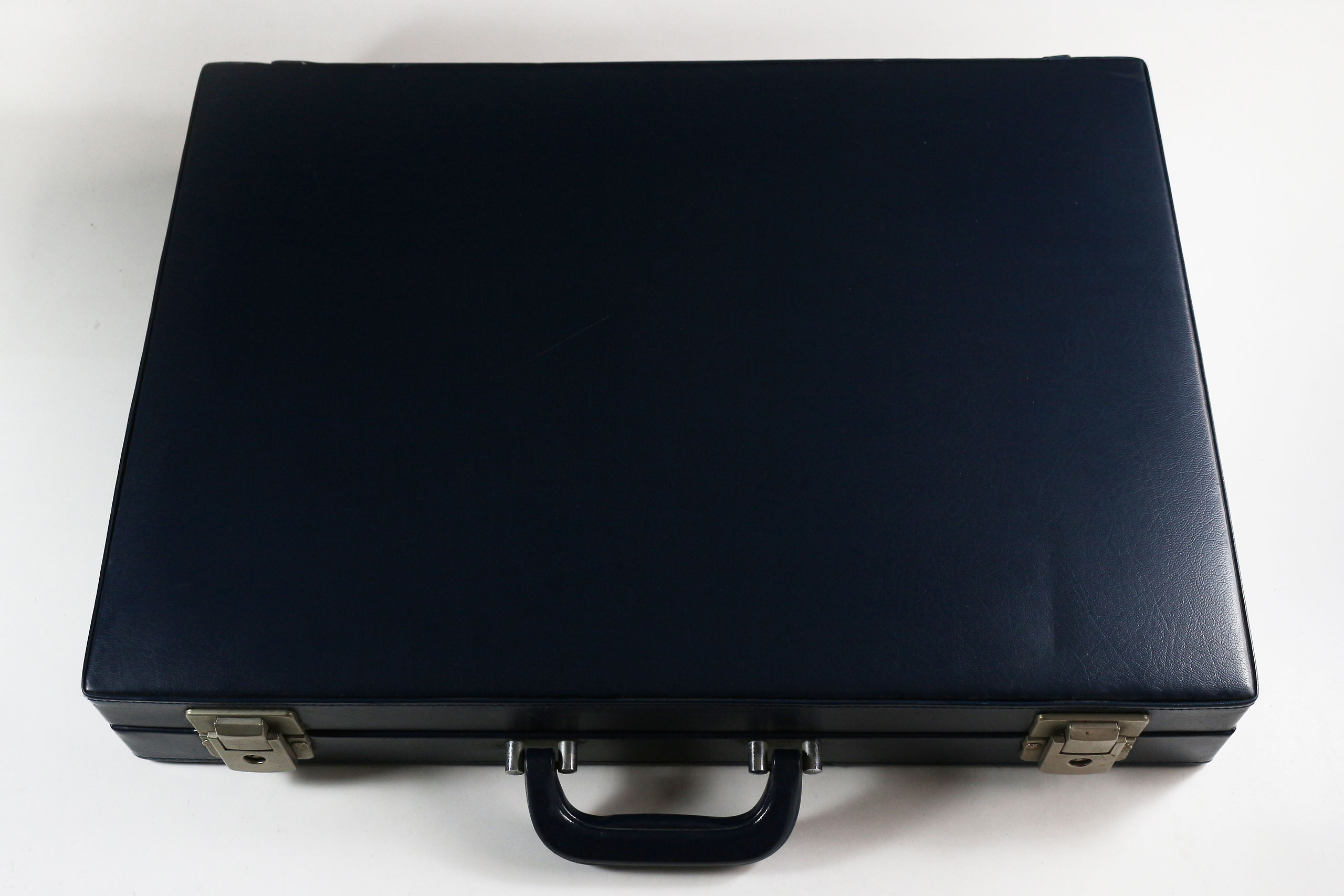
As Superbow Sunday rolls around once more (or should that be “bounces erratically”?) this year’s edition is well deserving of the name Superbow XL – yes, you heard that right, XL – due to its impressive size. Picture the scene: colleagues turn their heads, jaws dropping, as you stride confidently into the drawing office and set down your sleek, professional-looking briefcase upon the desk.
With a deft, cinematic click of its latches, you slowly lift the lid to reveal…
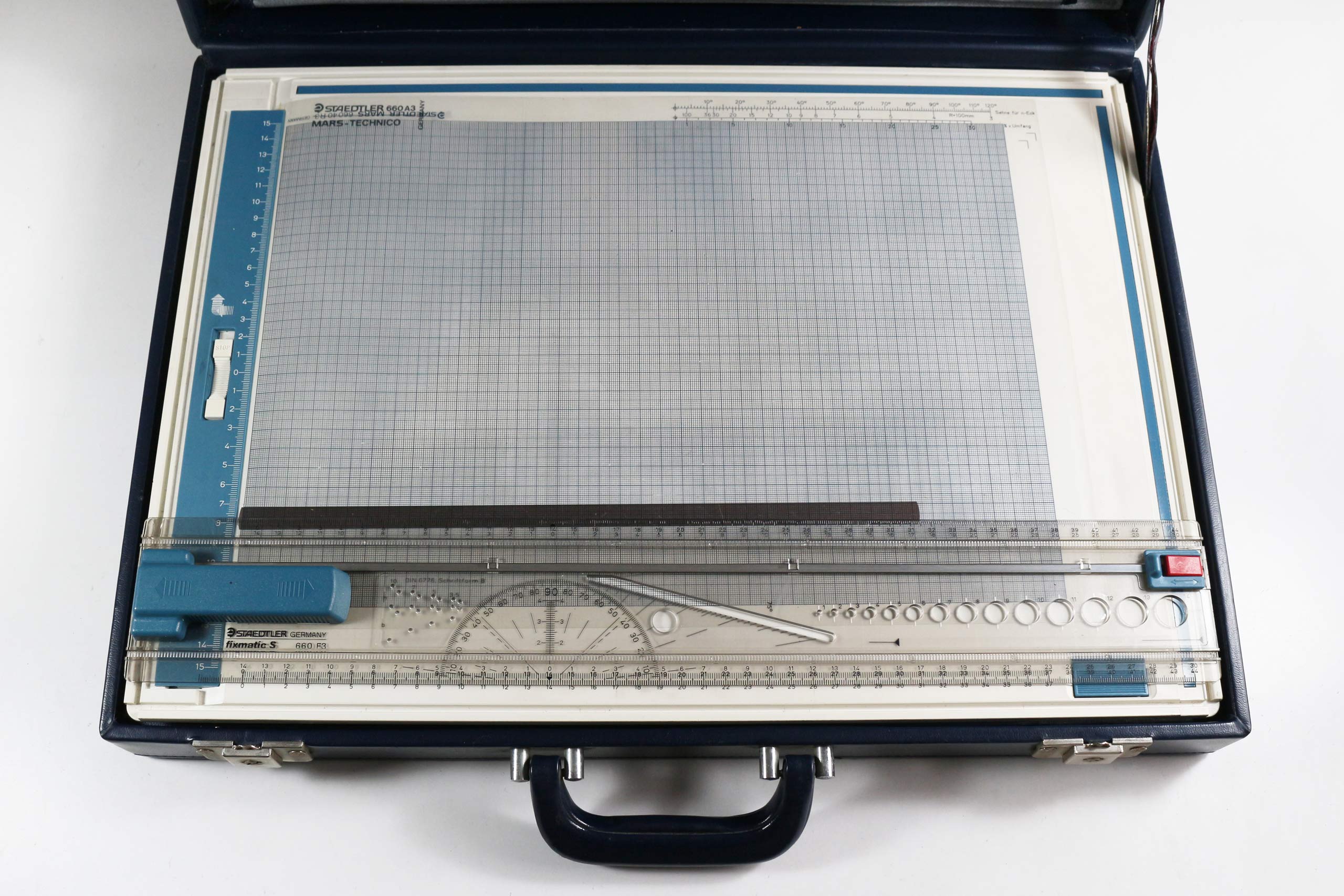
a small, plastic A3 drawing board? Hang on, let me just get this thing out.
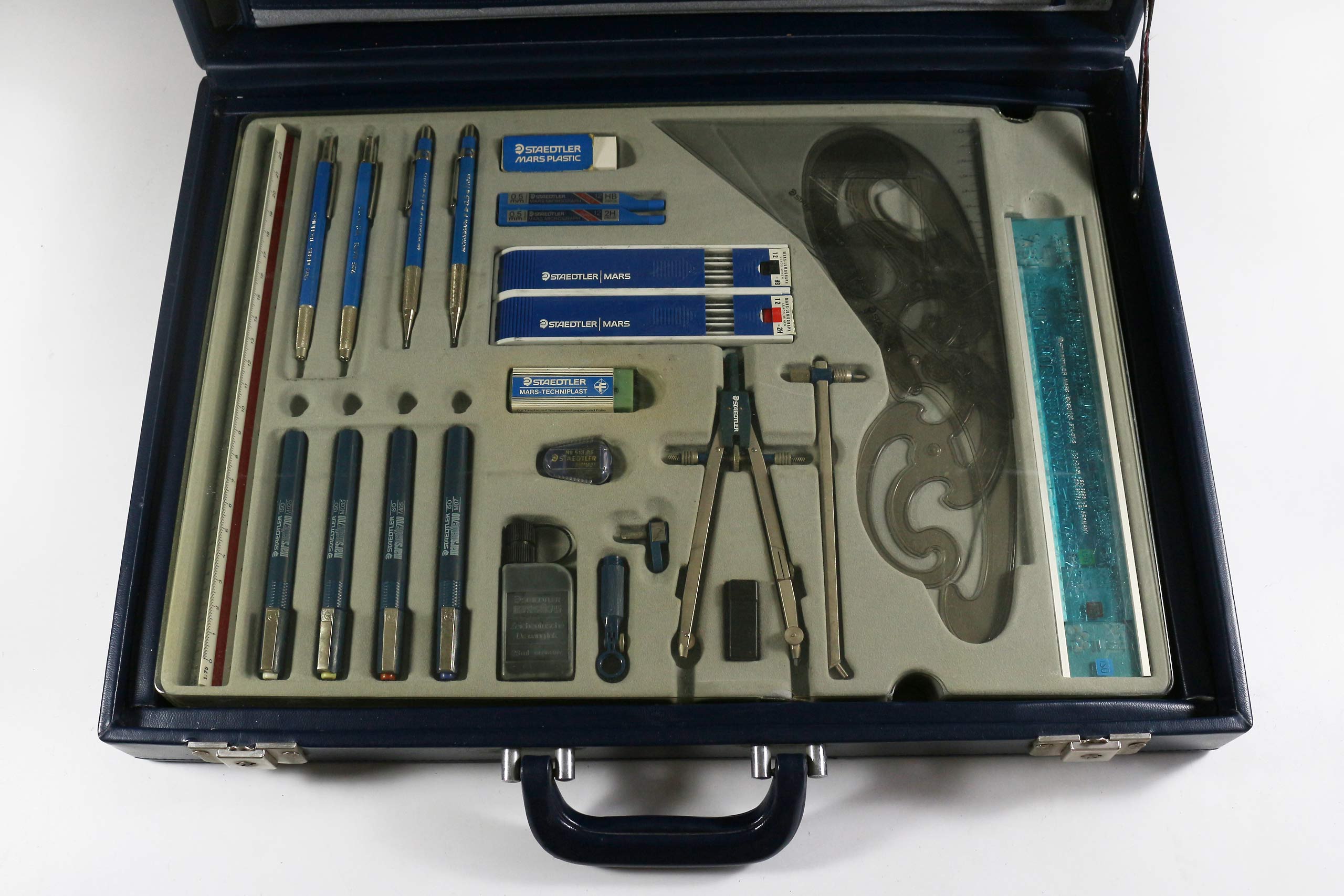
Ah, now we’re talking! Excuse me a moment while I find somewhere to put this flimsy transparent cover…
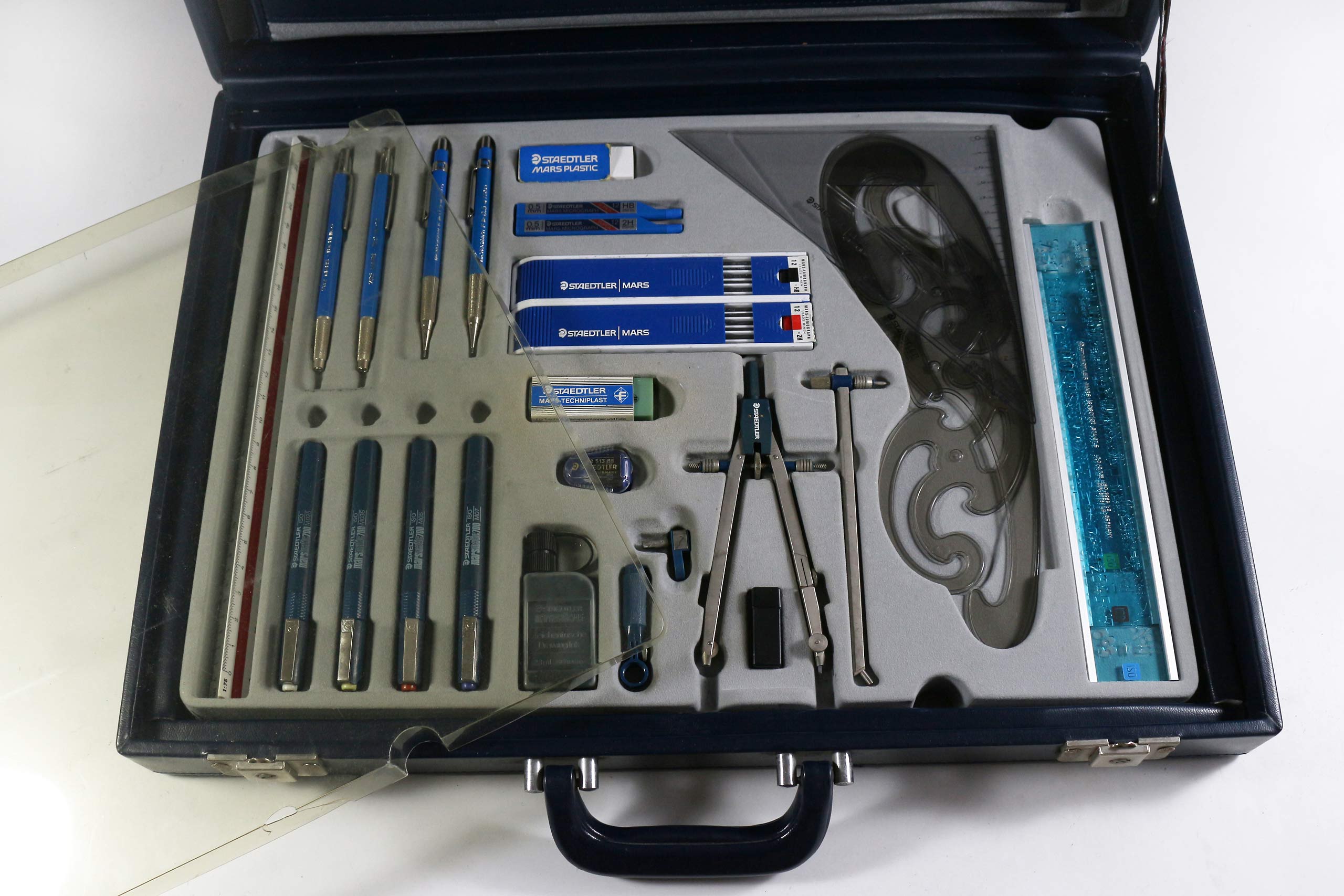
Et voilà! Everything you could ever need for technical drawing on the move (well, almost everything). Impressive, huh?
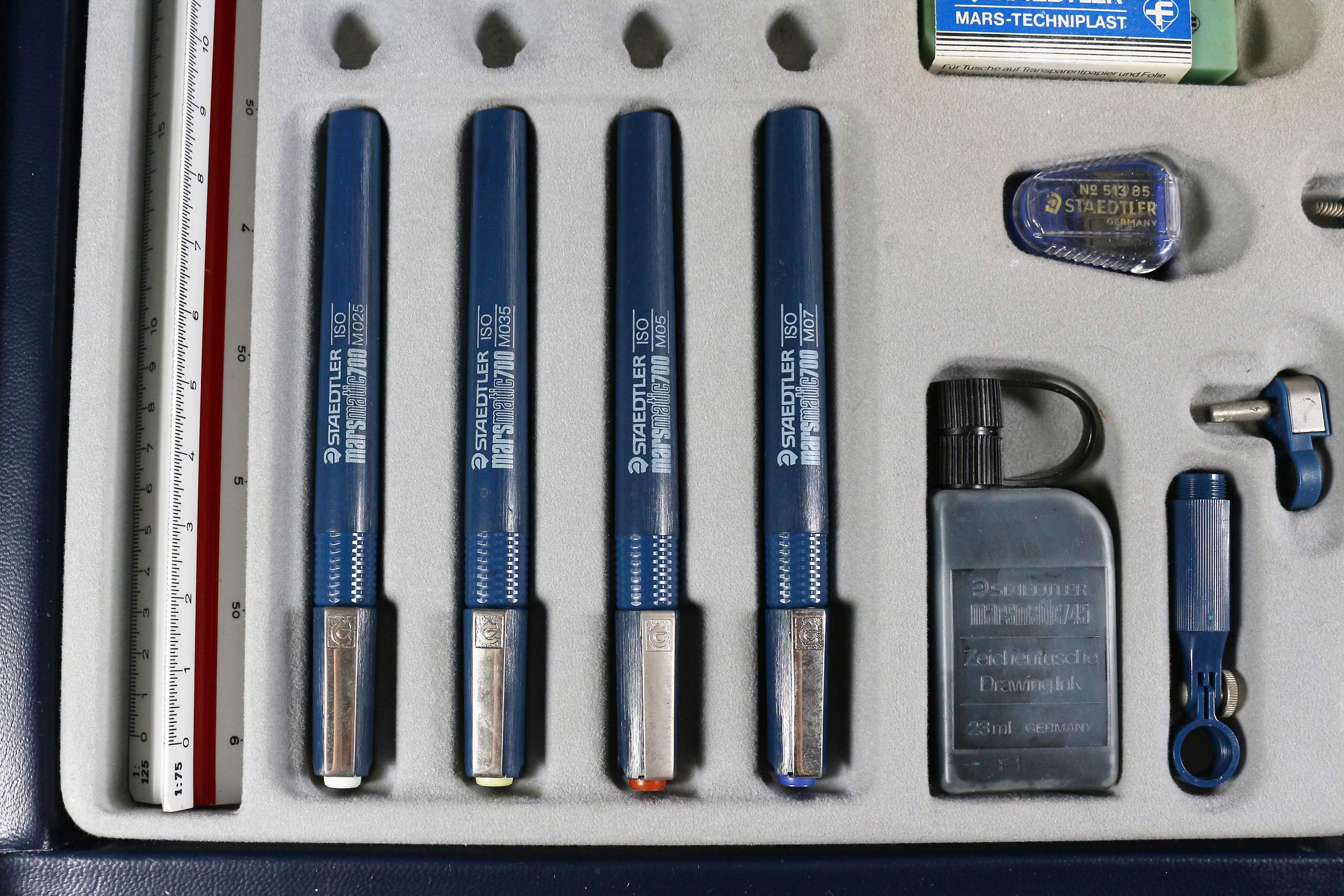
Certainly, the selection of Staedtler products included is not to be sniffed at: a full Superbow compass set with extension bar and accessories, four Marsmatic 700 technical pens with ink container, two each of Staedtler’s Mars-Technico 782 leadholders and Micrograph F fineliner pencils with refill packs, a dedicated lead pointer, pencil and ink erasers, triangular scale rule, set squares, French curves and several sizes of lettering template. This was all included as standard, without any of the all-too-common placeholders or empty spaces for additional purchases.
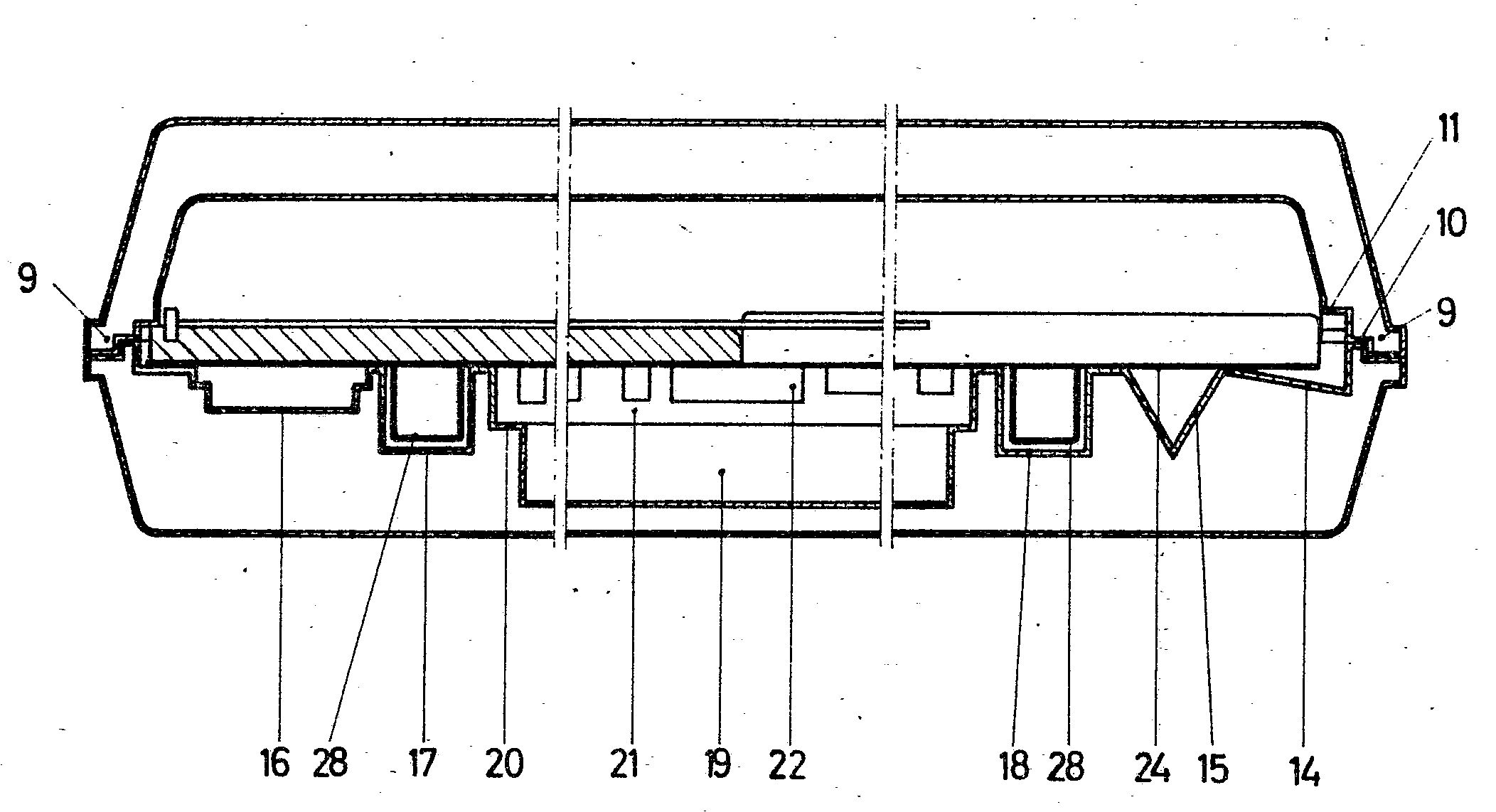
Similar attaché case or briefcase-based sets were offered by Rotring in the early to mid 1980s, but the originator of the type appears to have been Faber-Castell, who patented the idea a decade earlier.

With an application date of 30 November 1971, the patent was finally granted in December 1975 after seeing off challenges for prior art and other patent infringements by rival manufacturers Keuffel & Esser and Filler & Fiebig (aka Standardgraph) among others.
The snug fitting of the drawing board plays a key role in the design, doubling as an internal lid to the instrument tray when the briefcase is shut. In theory, this prevents the contents from moving about during transport. In practice, however, a perfect fit is hard to achieve – hence the thin transparent plastic lid that is moulded to precisely cover the tray and (with any luck) contain its contents. Unfortunately, these lids were fragile and unwieldy, so are often found to be missing.
Towards the right-hand side of the tray, there is a subtle wedge-shaped depression that allows the drawing board to be more easily removed by pushing down on its right edge, causing the other side to lift up. This detail can be seen in Faber-Castell’s patent drawings.
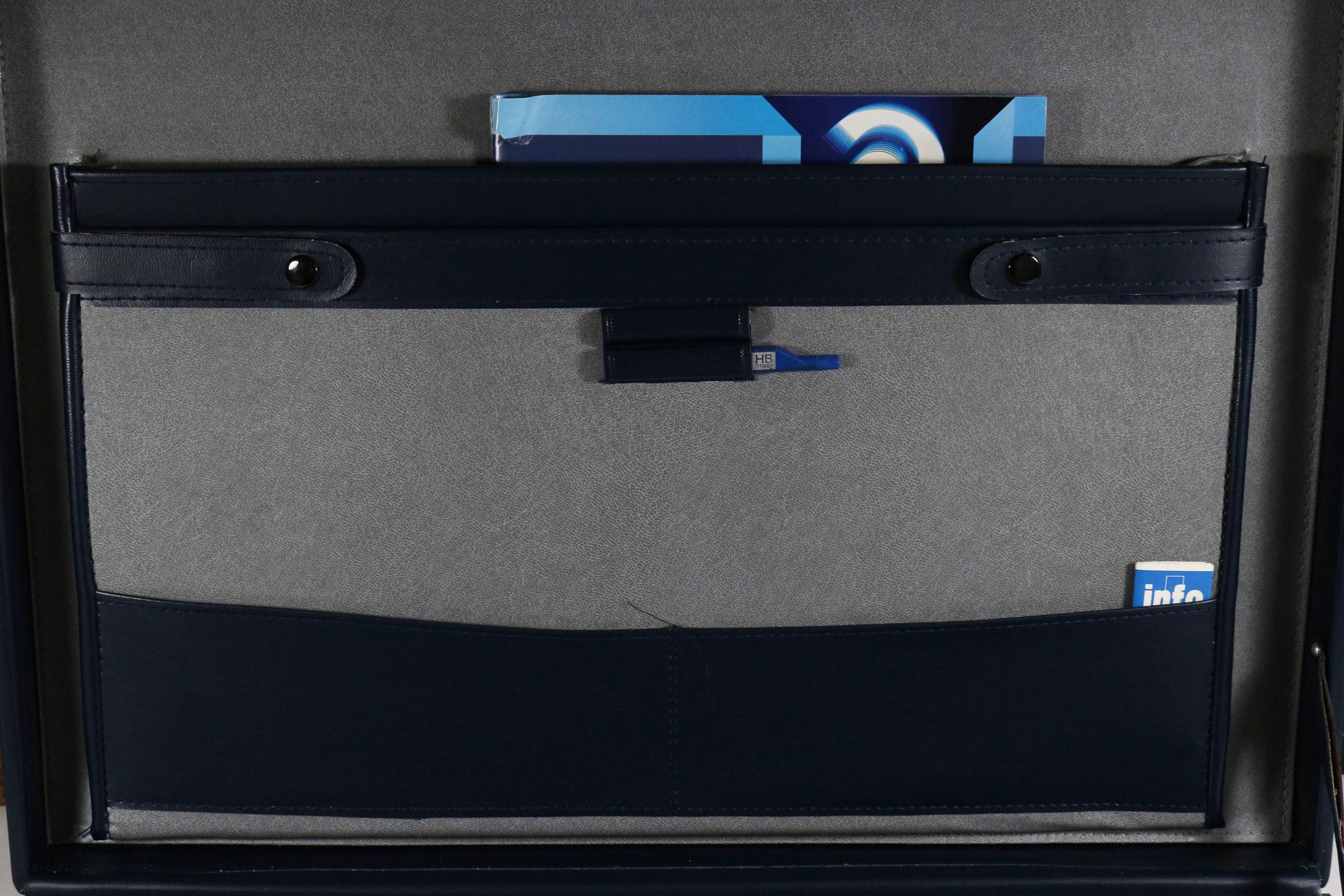
The original briefcases were hard plastic double-walled affairs, but by the 1980s Staedtler clearly wanted to project a more professional look with a soft leatherette exterior and a thinner, more traditional, rectilinear frame. Appropriately enough, Staedtler’s briefcase finish is dark blue in colour, although lacking any other brand-specific markings. Inside the lid are several additional concertina pockets and pen loops, secured by a pair of straps with press studs.
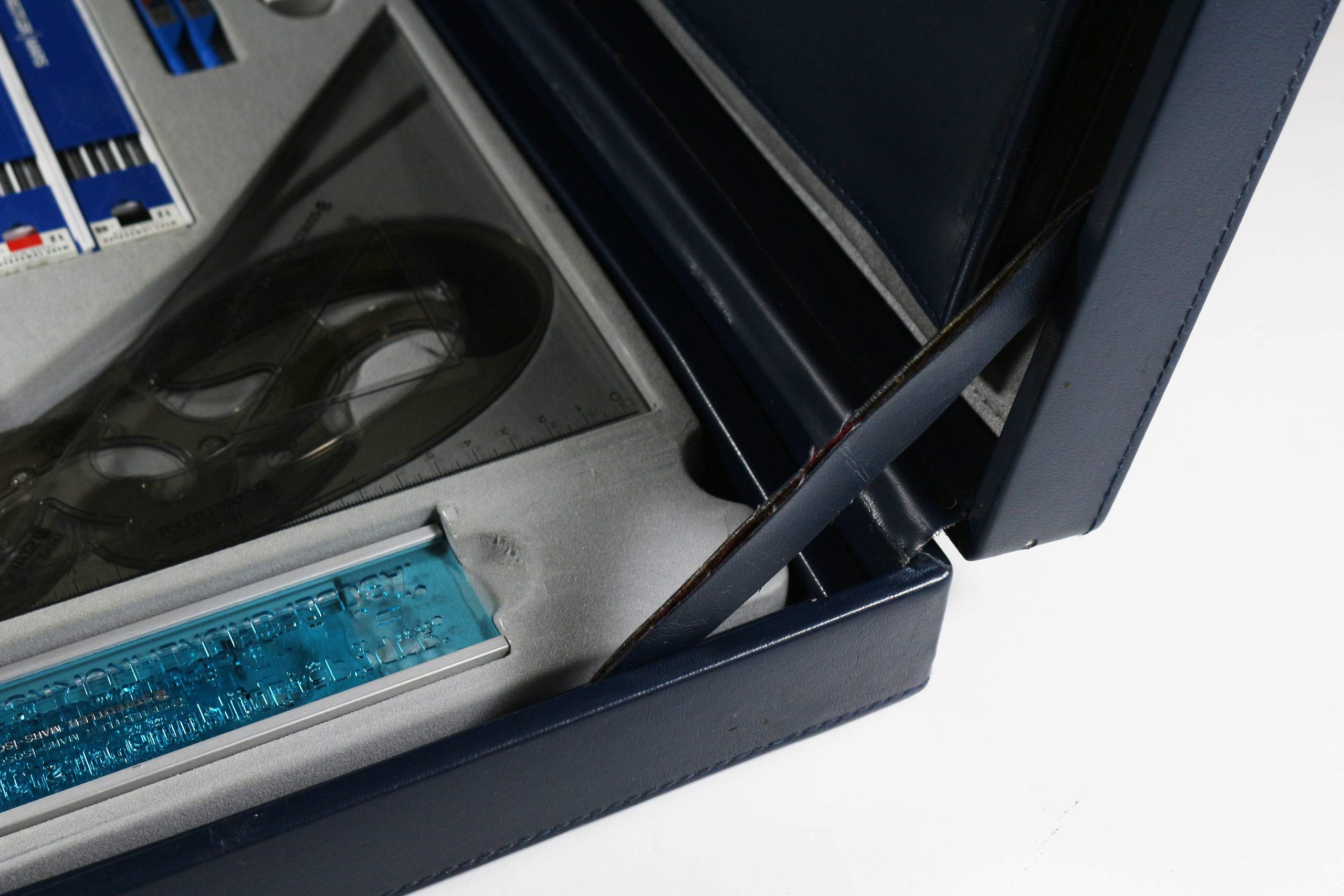
A leather restraint at one corner keeps the lid in a vertical position when open.
Counterintuitively for such large and elaborate sets, they appear to have been primarily aimed at the educational market. This is made clear by the inclusion in the document compartment within the lid of the briefcase of Staedtler’s Student catalogue for 1984.
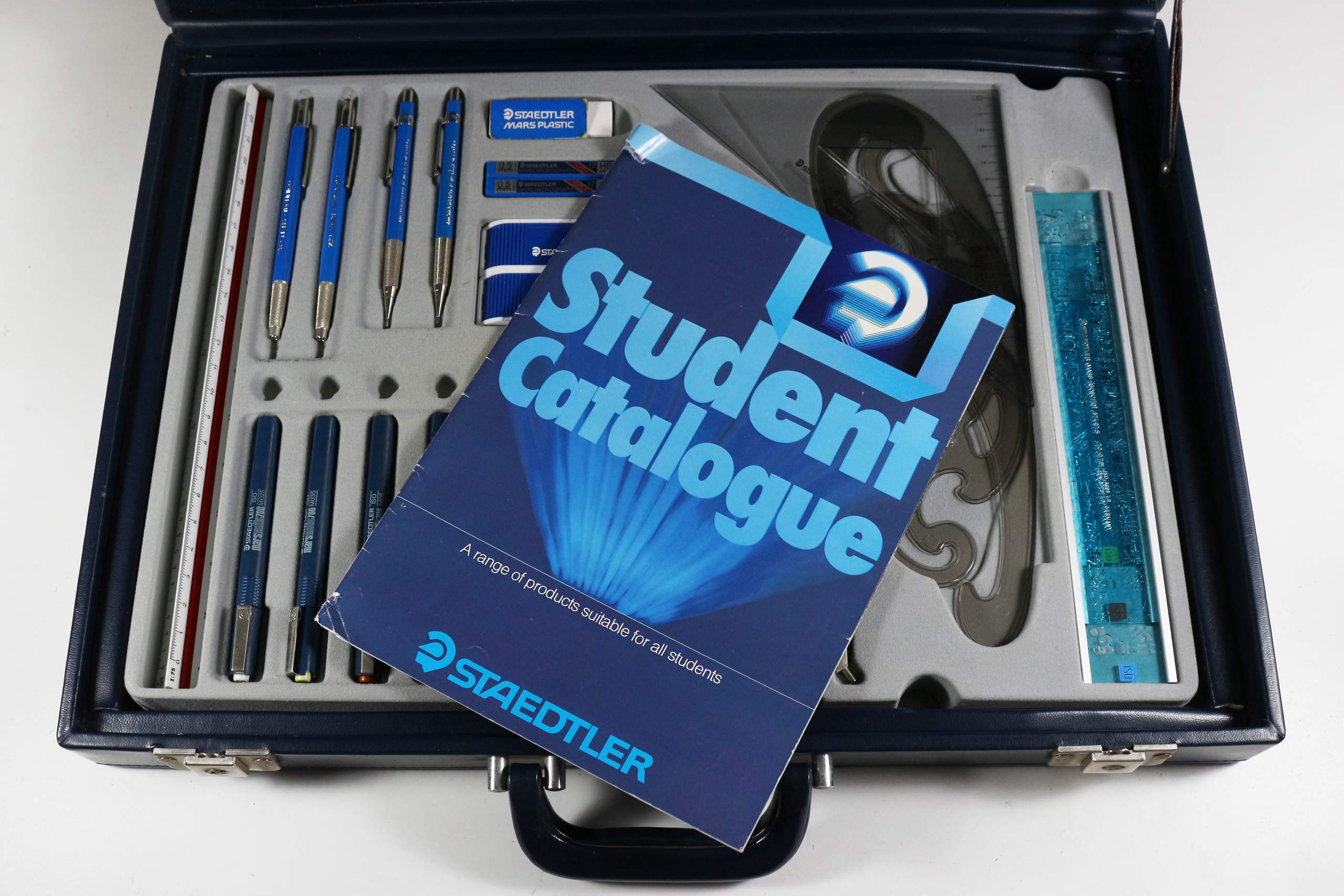
Inside, two models are pictured, the 670 A4 and 670 A3, depending on the size of drawing board included.
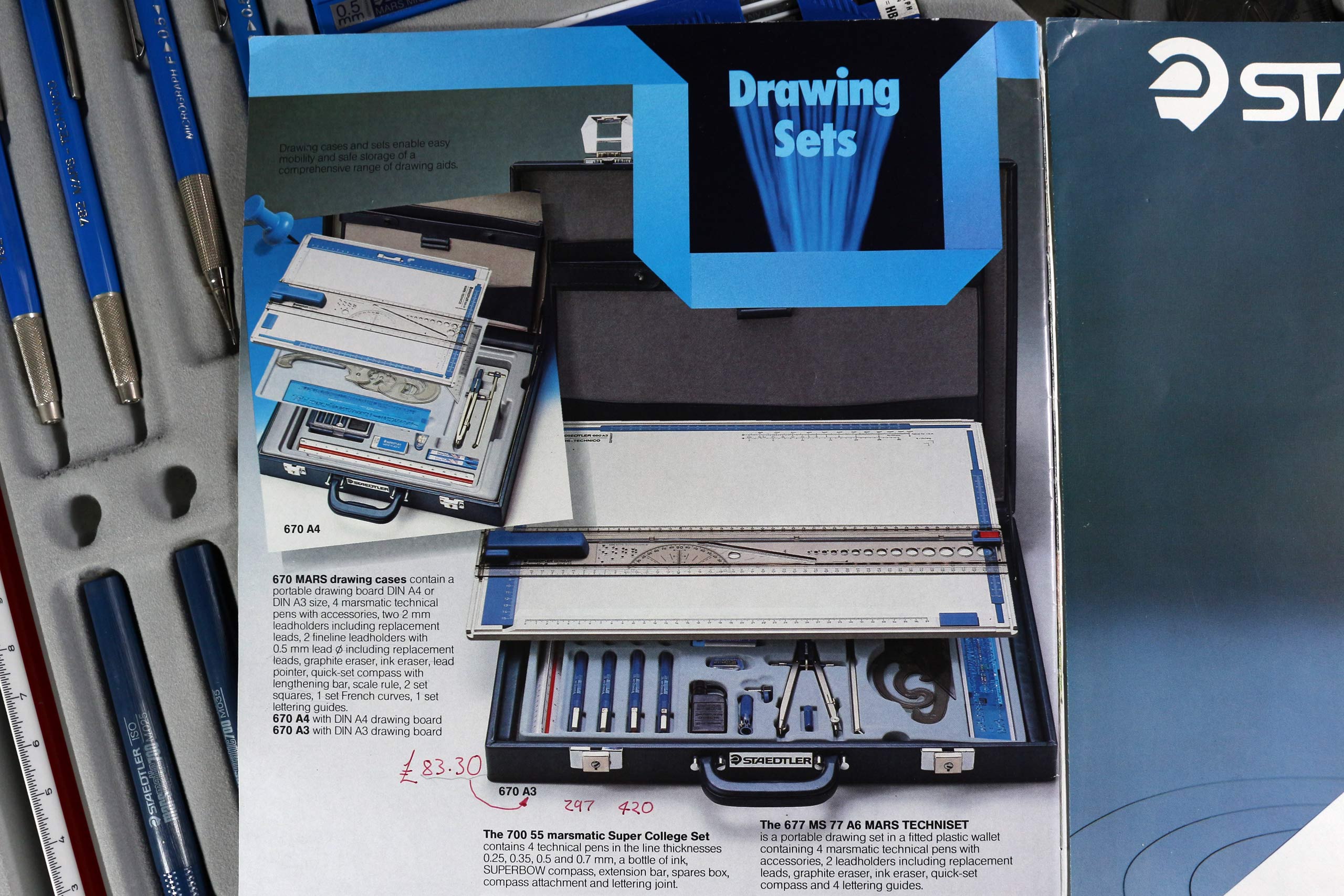
As a slightly smaller size of briefcase was used for the A4 model, the drawing instruments were arranged across two trays, with the drawing board sitting within a recess on top. For added compactness, the Marsmatic technical pens were included as a boxed set, rather than the custom tray design and pen station of the larger case seen below.
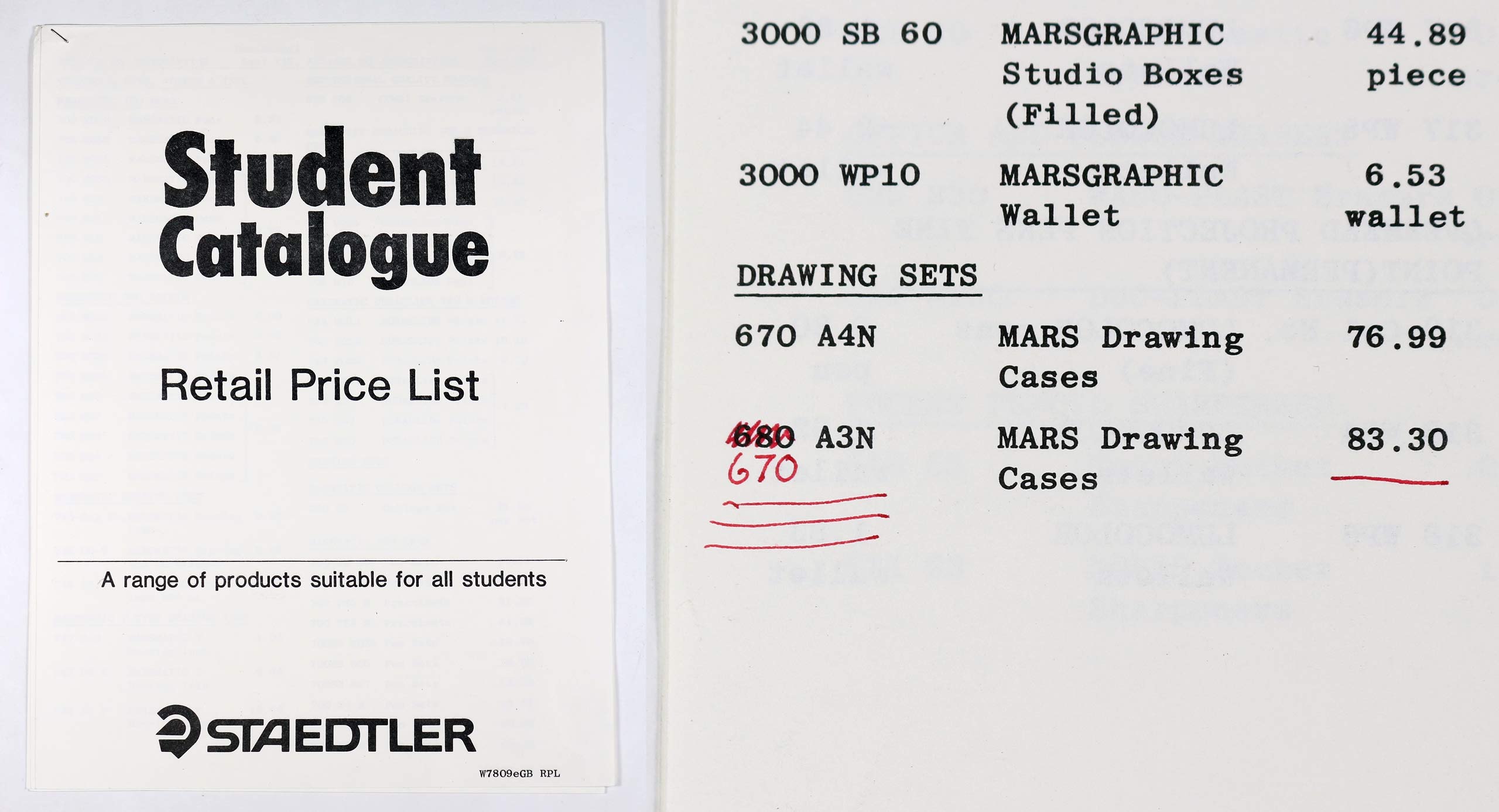
Due to the remainder of their contents being identical, there was not much difference in cost between the two sizes. The enclosed retail price list quotes £76.99 for the A4 and £83.30 for the A3 models, an uplift of just £6.31 for the larger drawing board and more commodious layout.
Even so, these were expensive items in their day, which may explain the low numbers encountered now. As marketed, the briefcases seem to have fallen into a grey area – too expensive for students, yet not comprehensive enough for professionals. Rotring’s offerings were similarly ambiguous, although they did sell an 8-pen version with more space for a custom selection of accessories, possibly to appeal to the higher end of the market.
Just to complete the picture, in the back of the student catalogue is a brochure for the newly released Mars Technico 555 compass, offering an upgrade path to the longstanding Superbow.
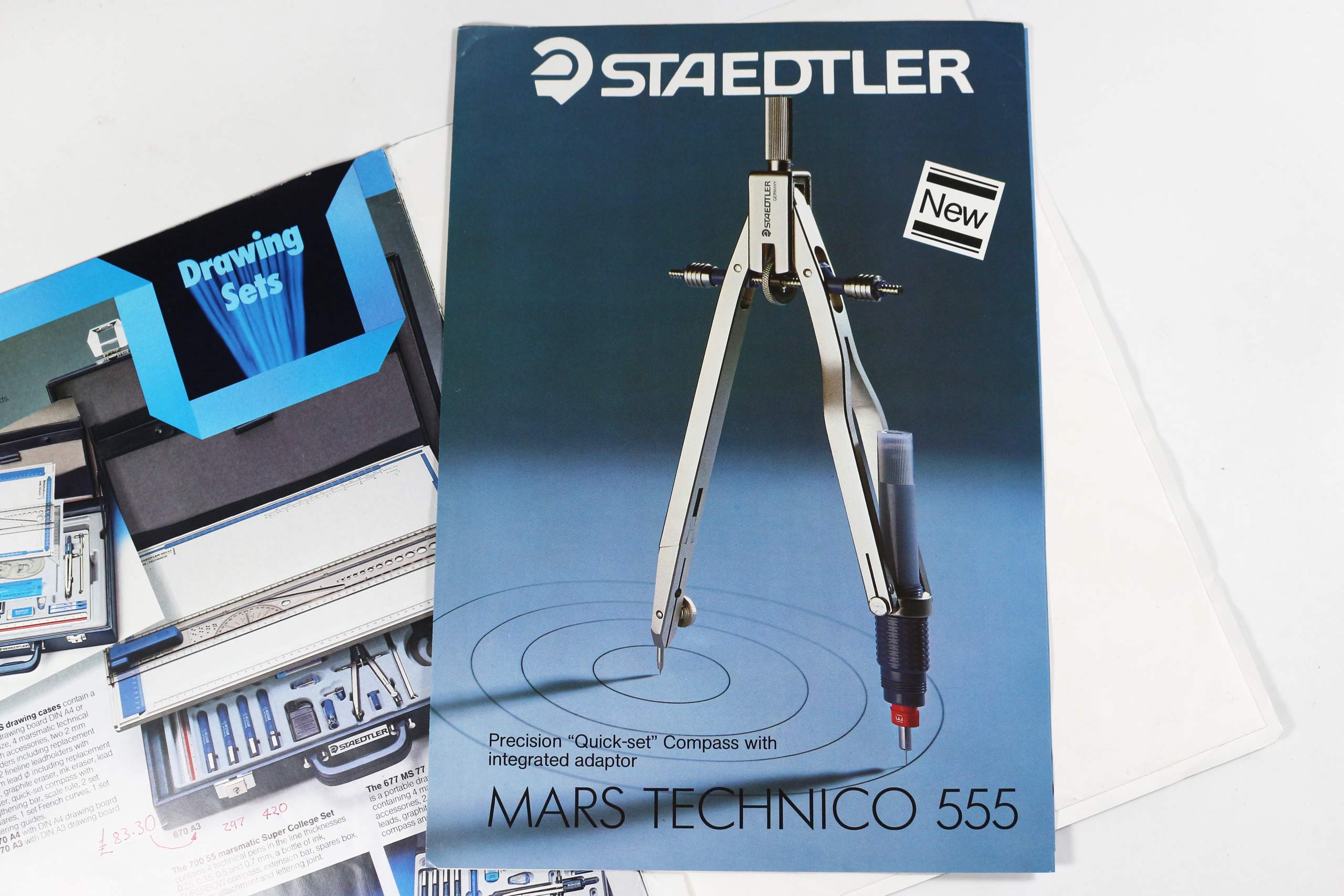
Unfortunately, the instrument tray of the briefcase is unable to accommodate the Technico’s updated bifurcated leg, an oversight which somewhat hobbles the growth potential of these aspirational briefcase sets.
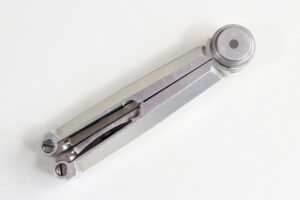
Aside from a couple of missing items, very little of the contents of my case seem to have had any real use. The one exception to this is the Superbow compass itself, which has taken a bit of a beating. On closer inspection, there is something else odd about this compass: namely the orientation of the Staedtler logo on its plastic head. Almost every iteration of the Superbow, not to mention Staedtler’s other compass ranges, has the text running from bottom to top, towards the handle. In this case, it runs in the opposite direction.
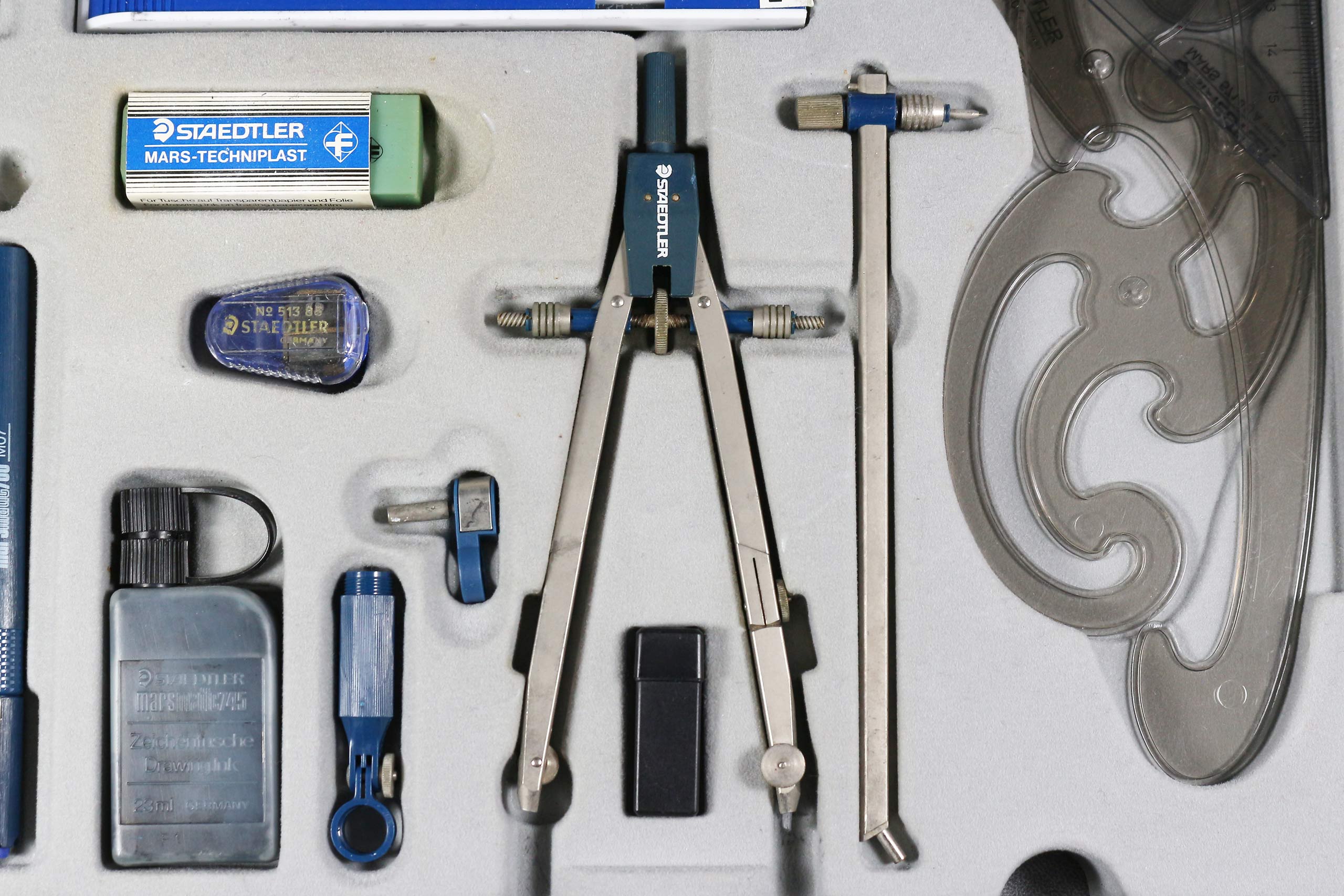
At first I had wondered if it was a short-lived variant, but a search of my archives yielded nothing. It therefore seems more likely that this was a simple manufacturing error, with the part being somehow rotated through 180 degrees at this stage of the process. While such mistakes are rare, they are not unheard of. For example, I have a Rotring quickset compass on which both the red company name and the blind stamp “W GERMANY” have been accidentally printed on the same face of the compass head, rather than on opposite sides as usual.
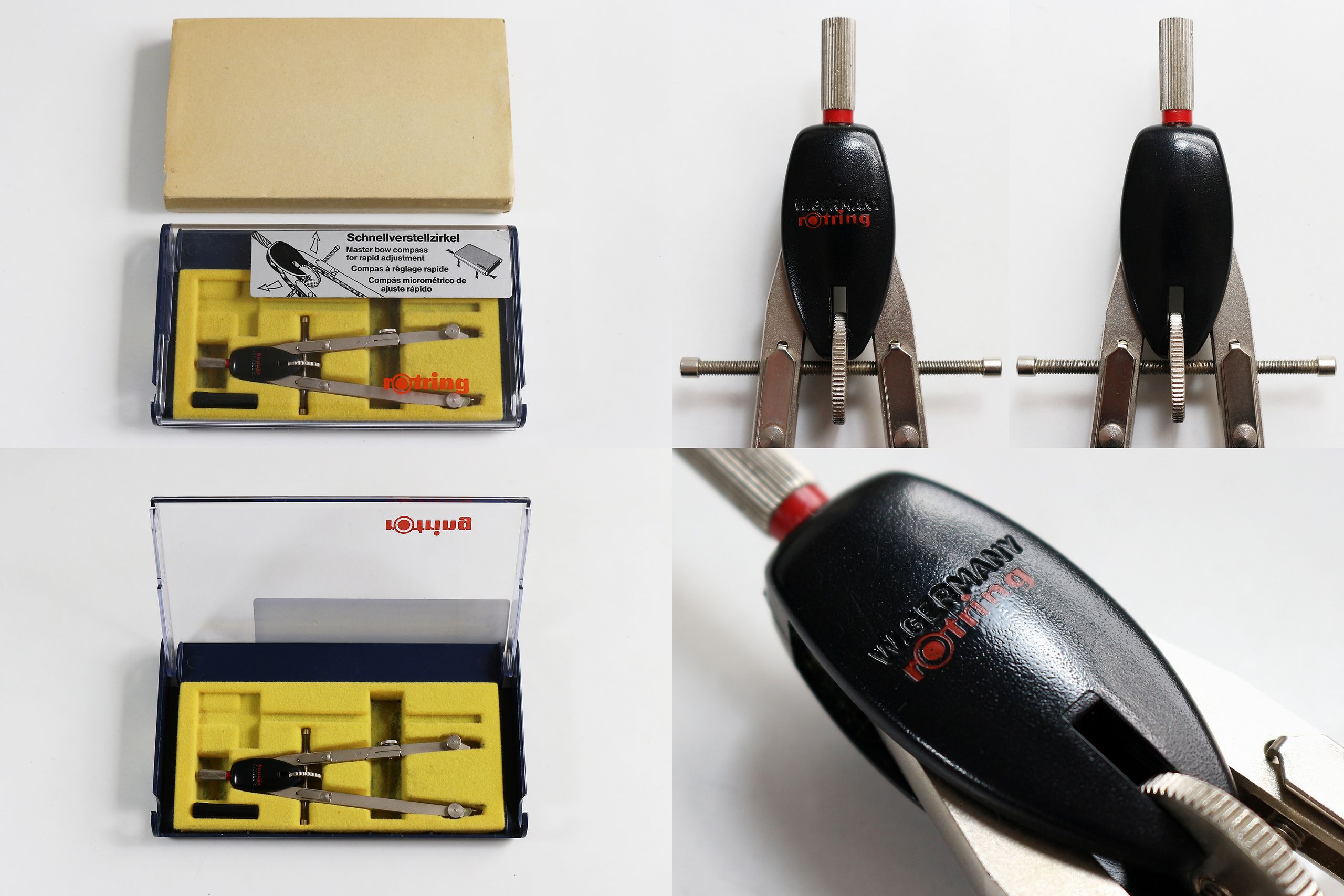
It is possible that such mistakes could have slipped through quality control, but tellingly the Rotring misprint is housed in a plain cardboard sleeve with only a sticker on the lid of its clearview case to identify it, rather than the usual full-colour Rotring outer box. This suggests it might have been sold as a cheaper second; perhaps Staedtler took a similar approach by directing seconds to their student-level sets, briefcase included.
Reservations aside, these briefcase sets still impress today, a reminder of the upwardly-mobile eighties and its power-dressing professionals. And unlike the movies, this briefcase is no MacGuffin – it’s the real deal!