
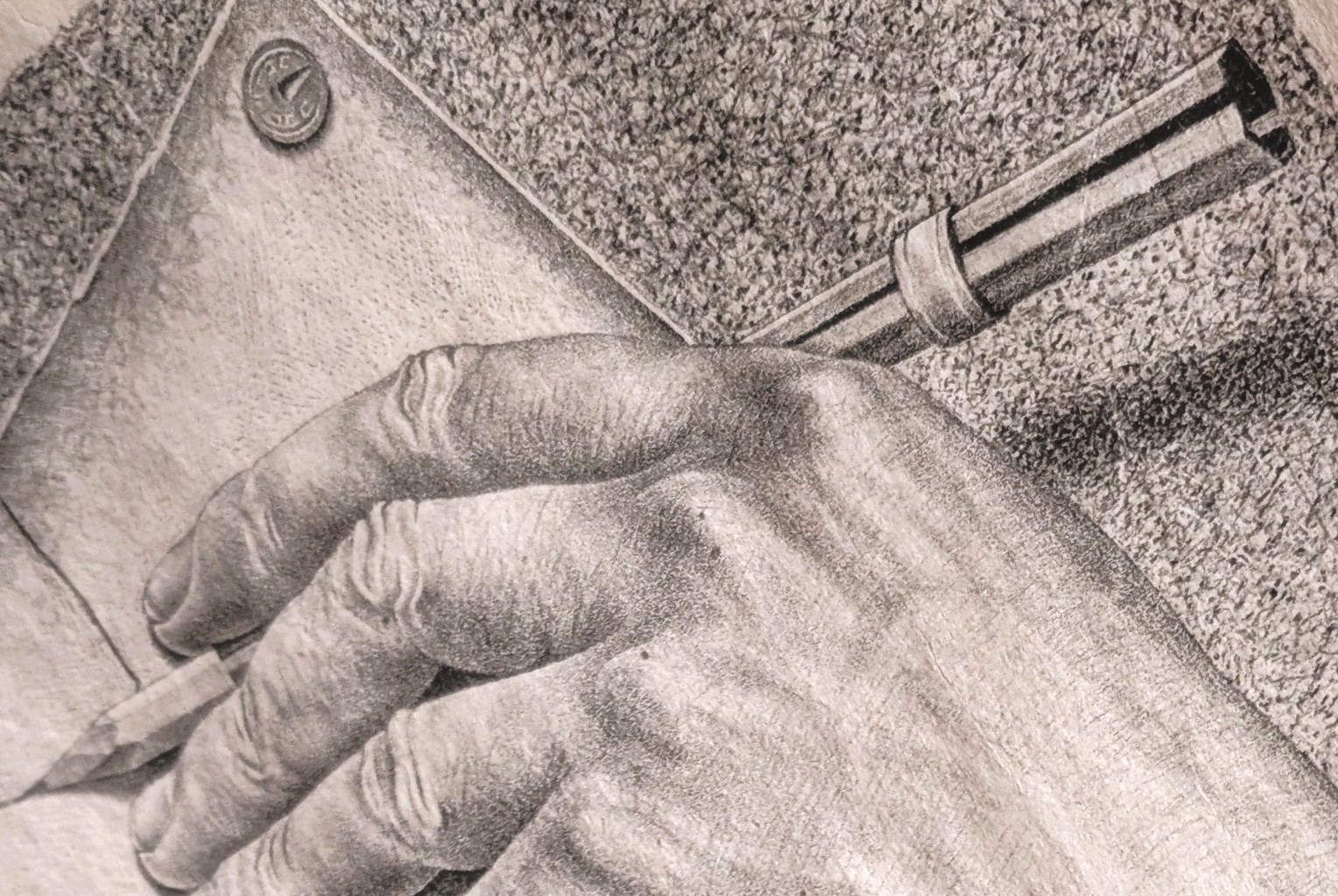
I recently took some time out to see the M.C. Escher exhibition at Somerset House in London. Coincidentally, the day of my visit also happened to be Escher’s birthday, which might account for how busy the gallery was! Among the excellent prints, some of which were new to me, and the exhibition’s numerous interactive spaces, a display case of the Dutch artist’s working tools caught my eye.
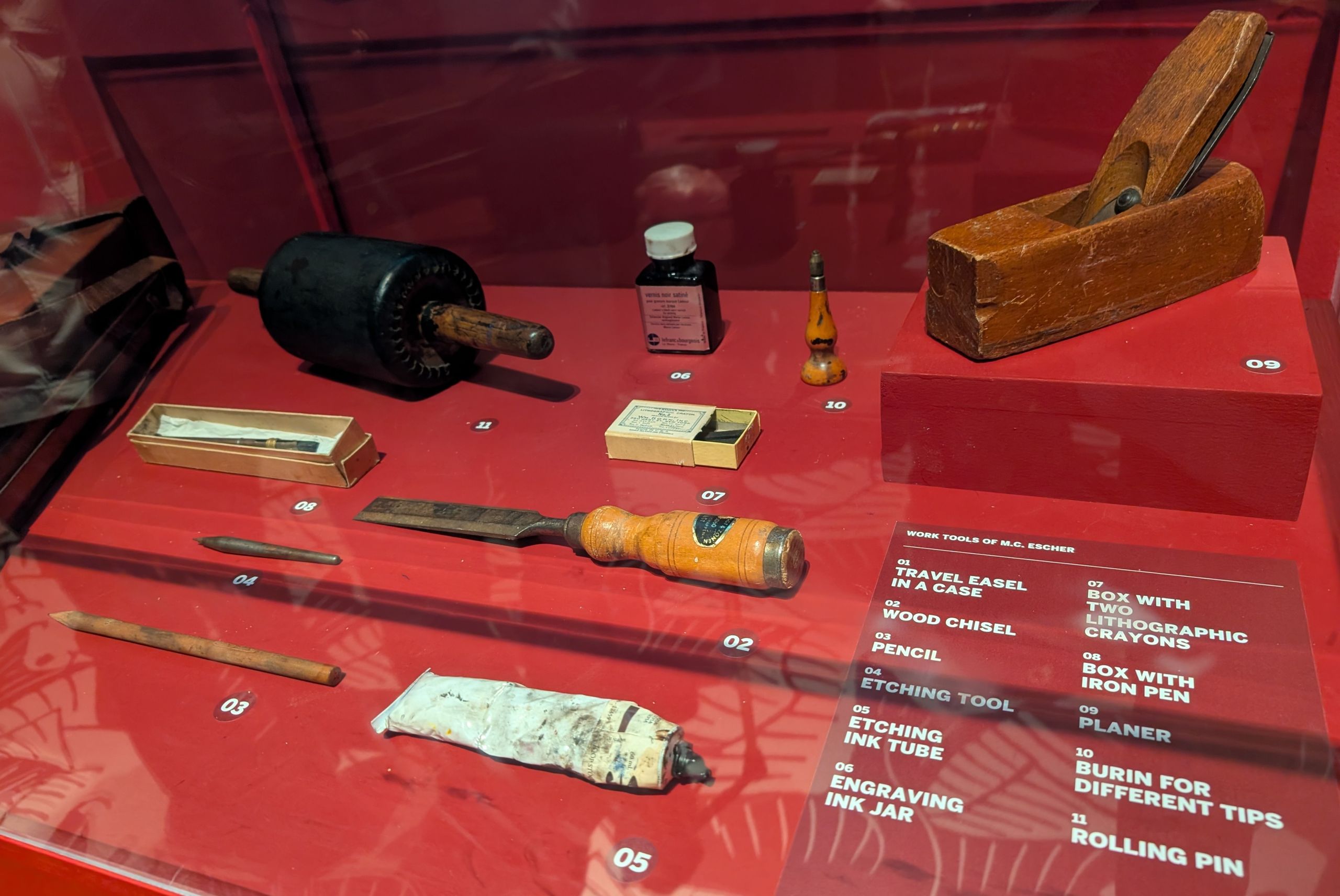
Included in the array of printmaking equipment was a traditional porte-crayon with a tamper/seal at one end (08), along with a box of Wm. Korn’s lithographic crayons (07) that would have been used with it (lithography involved drawing a positive image on a flat stone surface with a grease crayon or special ink). Also present was a traditional wooden pencil for sketching on paper (03), but sadly not the famous bone spoon that Escher used for printing his woodcuts.
Although described by its caption as an “iron pen”, the porte-crayon’s design suggests it is an example of Blanzy-Conté-Gilbert’s “Le Bi-Bosse” in brass (model No. 2710), a successful twentieth-century porte-crayon that was available in both brass and steel (the latter being named “Le Bi-Bosse Supérieur No. 2713 Acier Extra”).
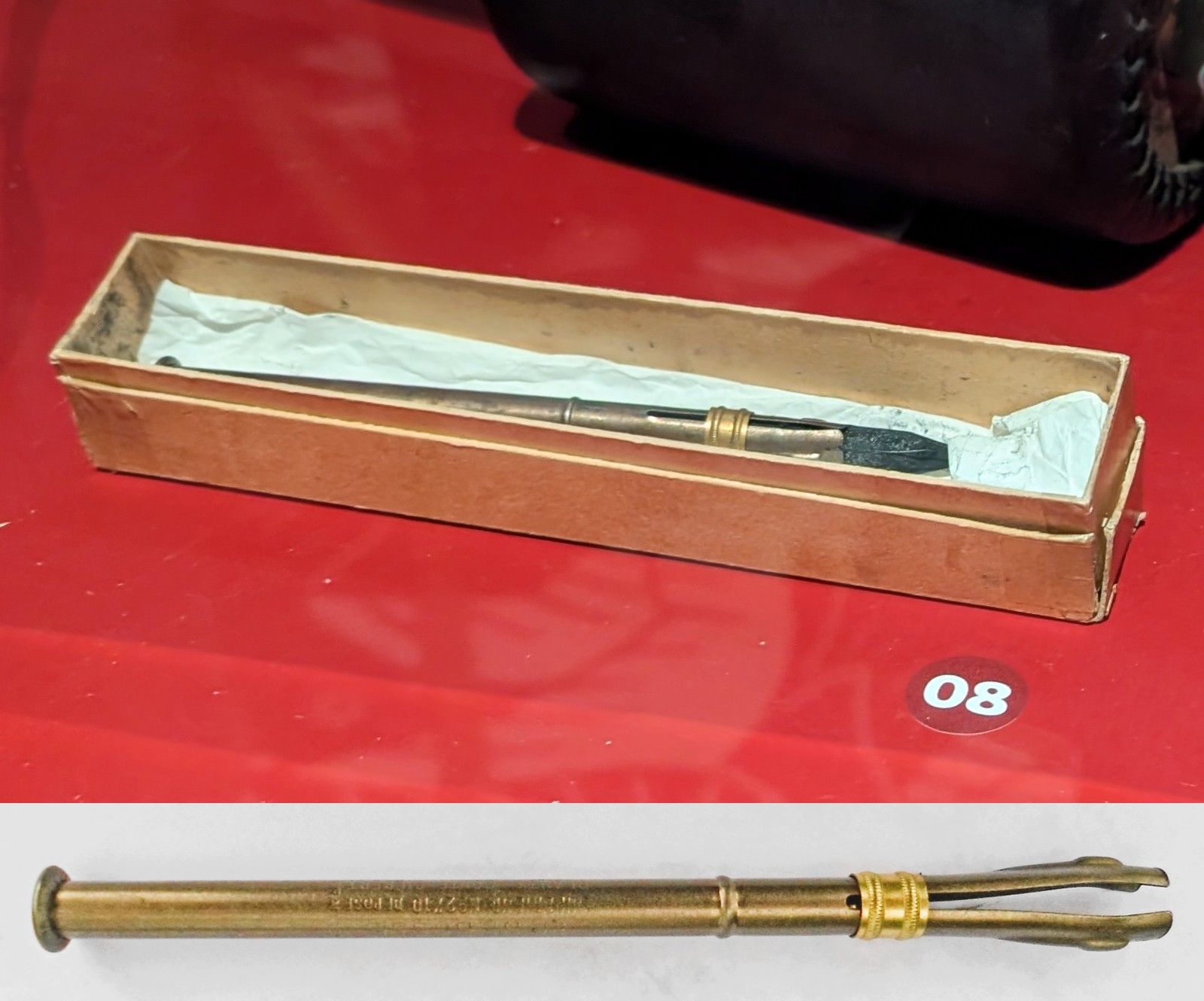
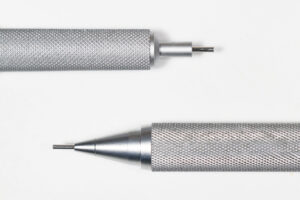
A comparison of the boxed exhibition porte-crayon (top) and the Bi-Bosse (bottom) leaves little room for doubt that this was the model used by Escher.
Later in the exhibition, I was surprised to find another pair of metal porte-crayons, this time depicted in Escher’s famous work Drawing Hands of 1948.
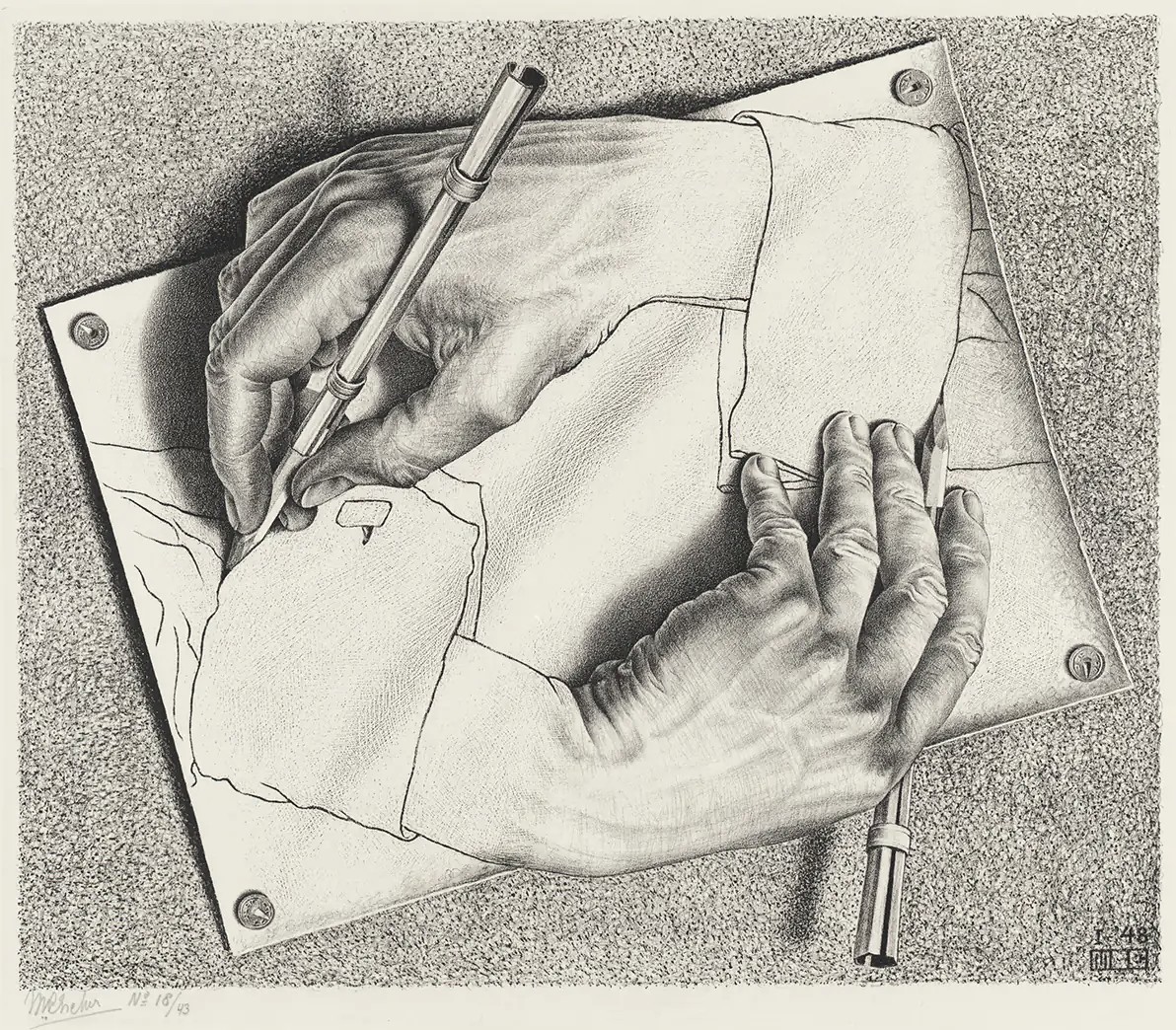
These are of the more usual double-ended variety, although unusually they are fitted not with lithographic crayons, but with the short stubs of hexagonal wooden pencils. In effect, they are serving the purpose of the traditional pencil extender.
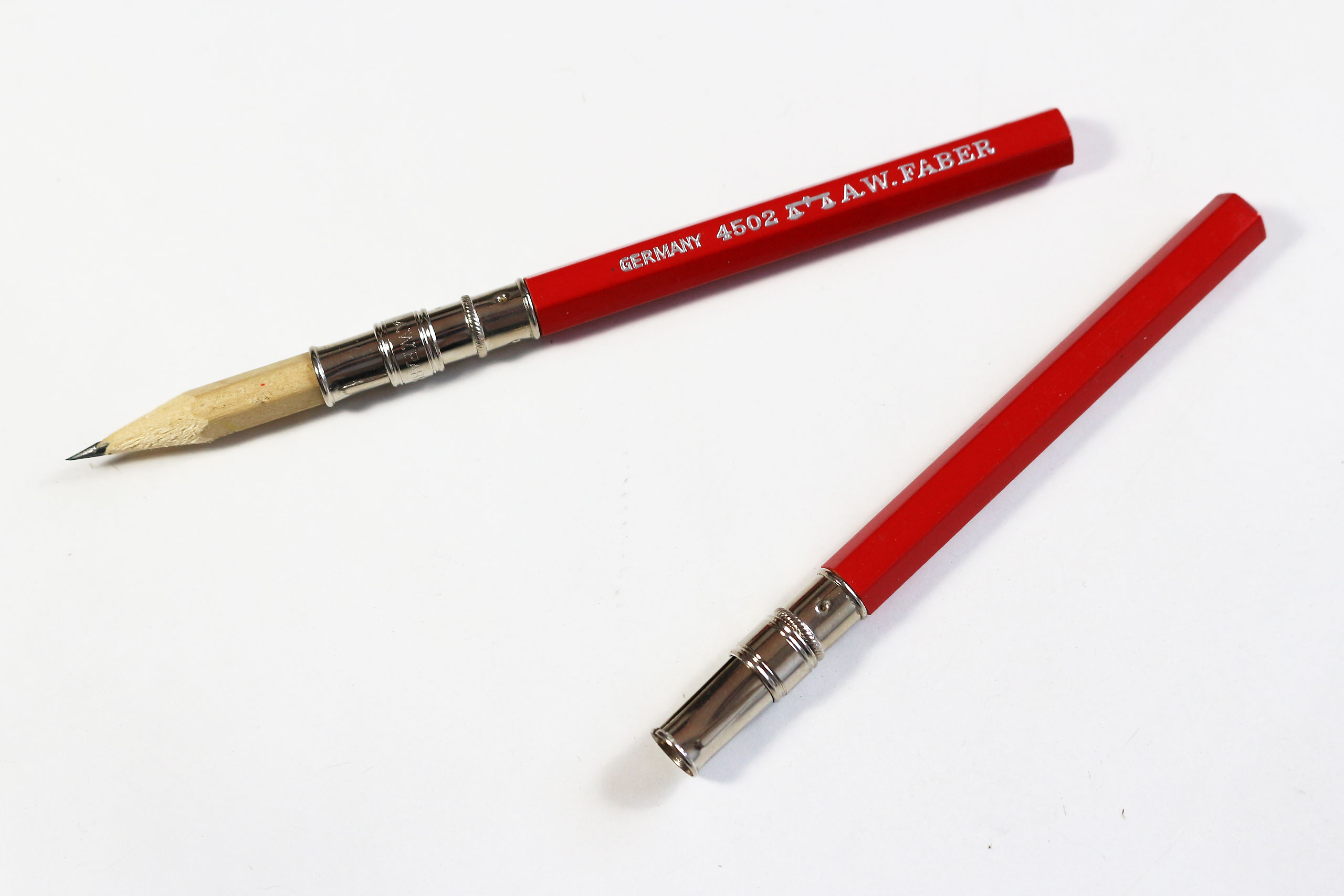
This is highly uconventional in my experience, as the porte-crayon was generally sized for holding pieces of chalk and charcoal that were somewhat narrower than a standard pencil. Indeed, the porte-crayon in the exhibition display was still fitted with a sharpened lithographic crayon stump.
To put this theory to the test, I fitted a standard brass porte-crayon as depicted in Drawing Hands with a short piece of pencil (in this case one of the ubiquitous IKEA stub pencils, being of fairly average girth for a hexagonal pencil at 7.5 mm wide – comparable to a Staedtler Lumograph and slightly narrower than a Faber-Castell 9000 – thus saving me the job of laboriously whittling down a full-length drawing pencil).
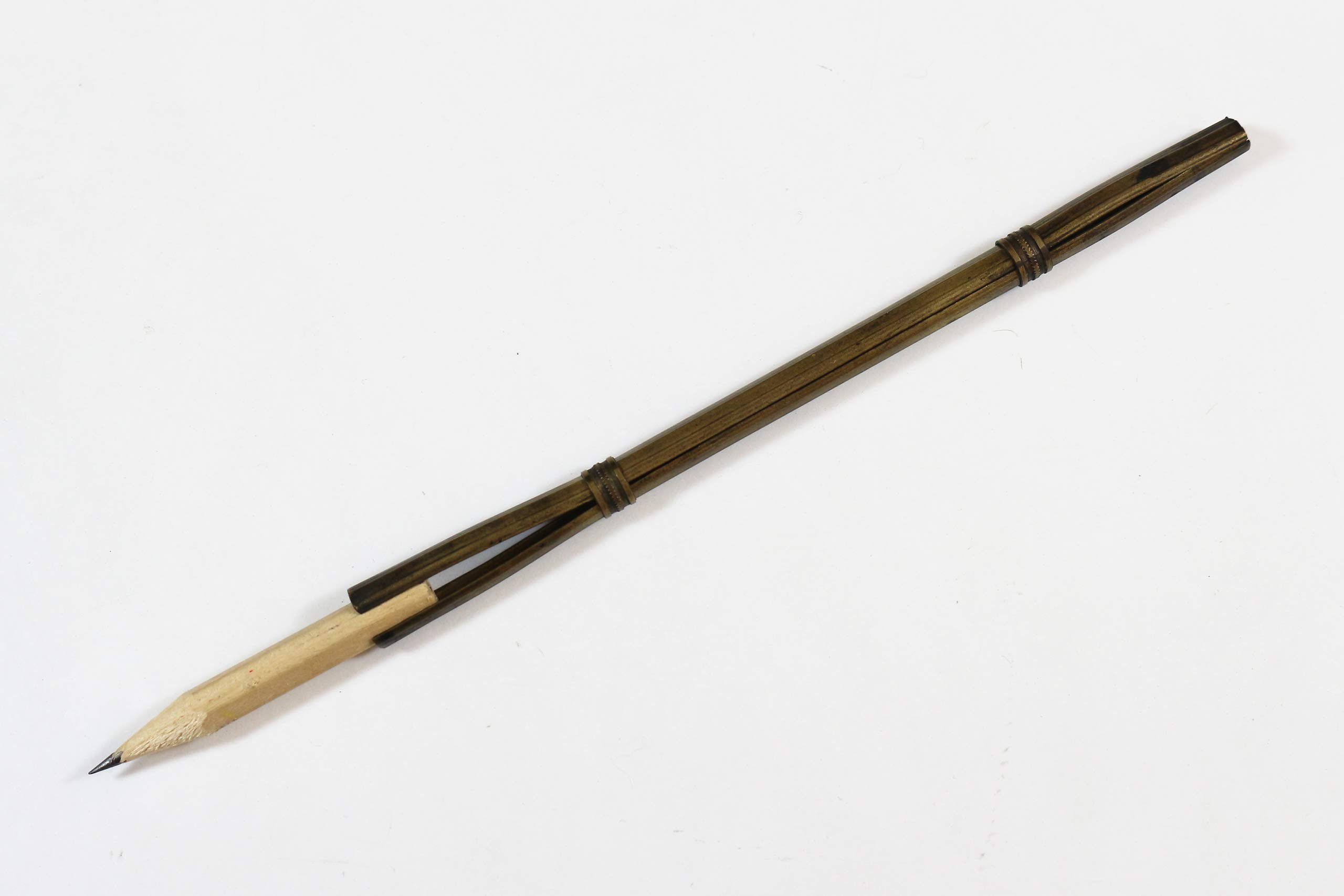
As can be seen, the porte-crayon will just about hold a wooden pencil, but only under considerable strain; it was scarcely possible to tighten the ring without the risk of breaking something. A comparison with the pencil extender lays bare the inherent unwieldiness of the arrangement.
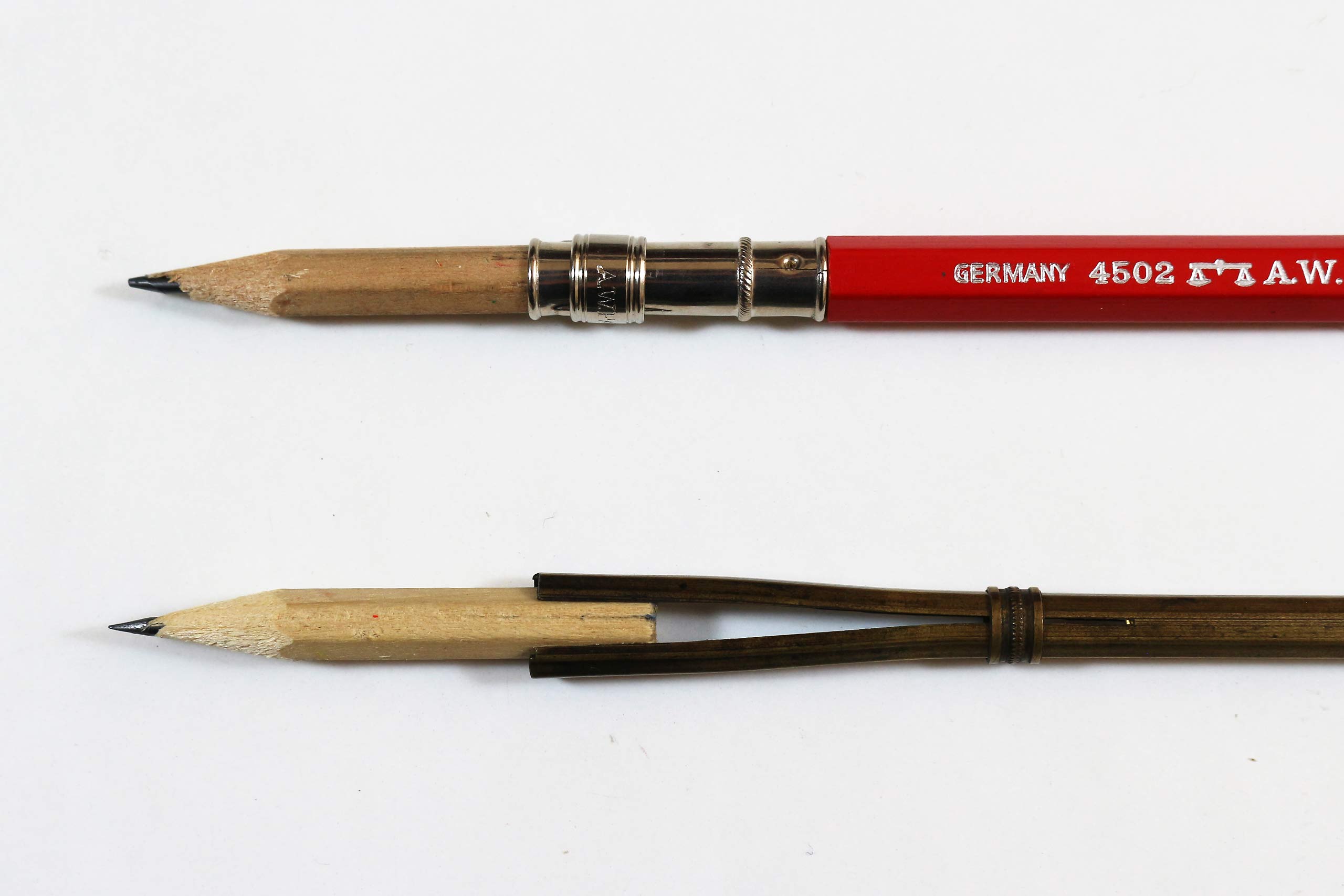
Clearly, there was no chance of my ordinary porte-crayon being able to replicate Escher’s configuration, with the ring pushed down to within a centimetre of the pencil’s end, jaws barely deviating from the parallel.
This raises the question, did Escher actually use his porte-crayons in this way, or was it an artistic conceit intended to make the process of lithographic drawing more intelligible to a lay audience who may have been confused by the featureless stump of a lithographic crayon?
That Escher was attuned to such sensibilities is evident in this quote from a 1963 lecture on “the impossible” (see p. 147 of M.C. Escher: His Life and Complete Graphic Work, 1981; English translation 1982), in which he explained:
If you want to express something impossible, you must keep to certain rules … The element of mystery to which you want to draw attention should be surrounded and veiled by a quite obvious, readily recognisable commonness.
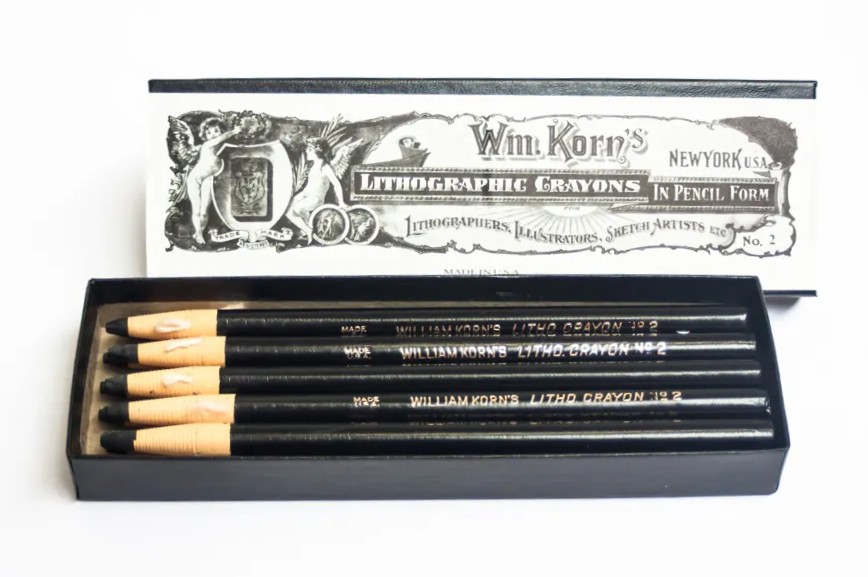
Certainly a hand-sharpened pencil is both recognisable and common, fulfilling the symbolic requirement that underpins the visual paradox (it is worth mentioning that there was such a thing as a lithographic pencil, but these were much thicker than a standard pencil and came with a peel-off casing, as can be seen by this box also by Korn).
As if this wasn’t already confusing enough, also in the exhibition was a video of Escher at work on a drawing (see from 48:55).
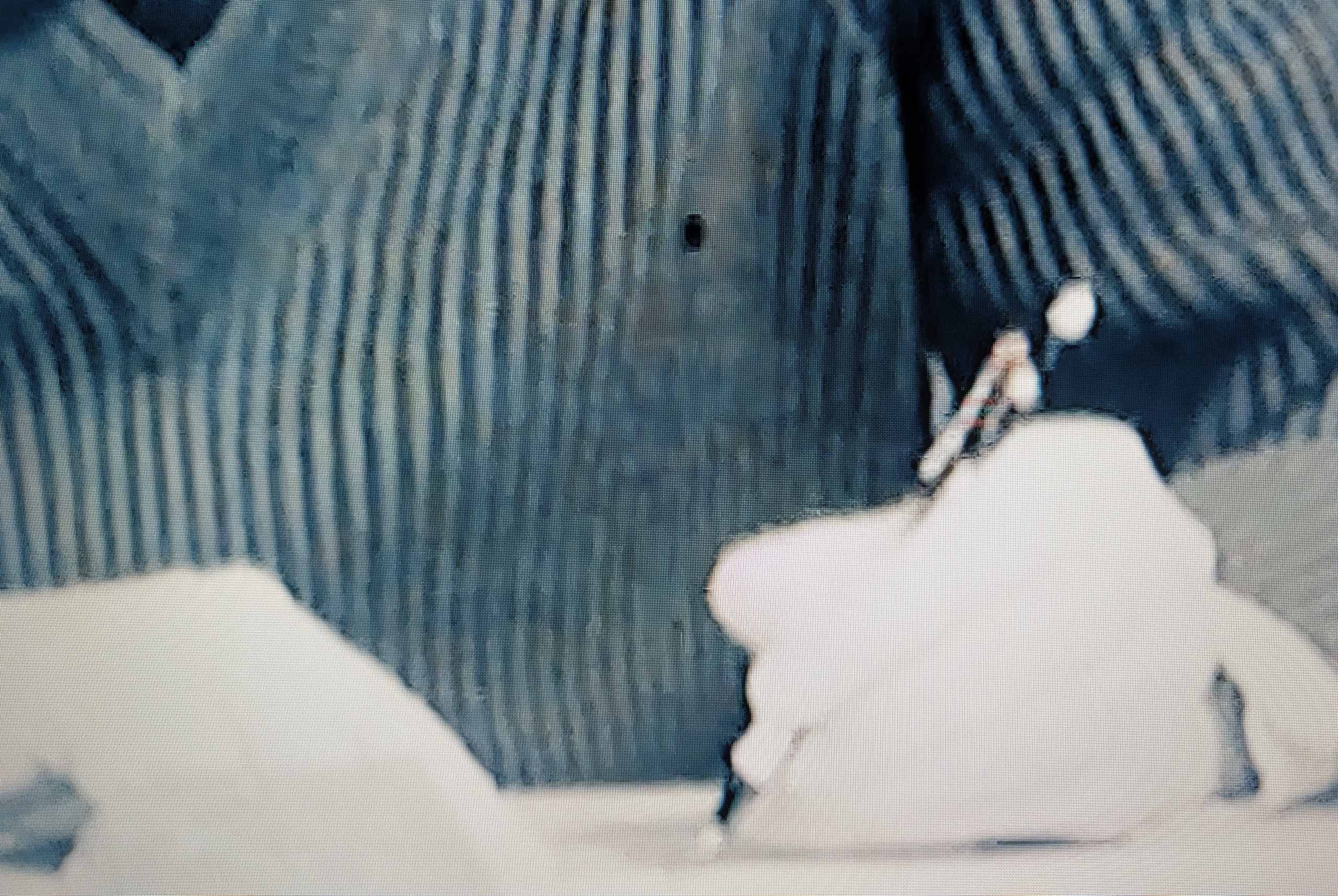
It is difficult to make out in detail from the grainy black-and-white footage, but the artist clearly holds a black-bodied mechanical pencil with a distinctive clip – almost certainly one of the models from Swiss maker Caran d’Ache.
Sure enough, the same observation had been made in the mechanical pencils community on reddit, which tentatively identified the leadholder being used by Escher in another film, Adventures in Perception (1971), as the Caran d’Ache Ecrifix 877 (from 10:16).
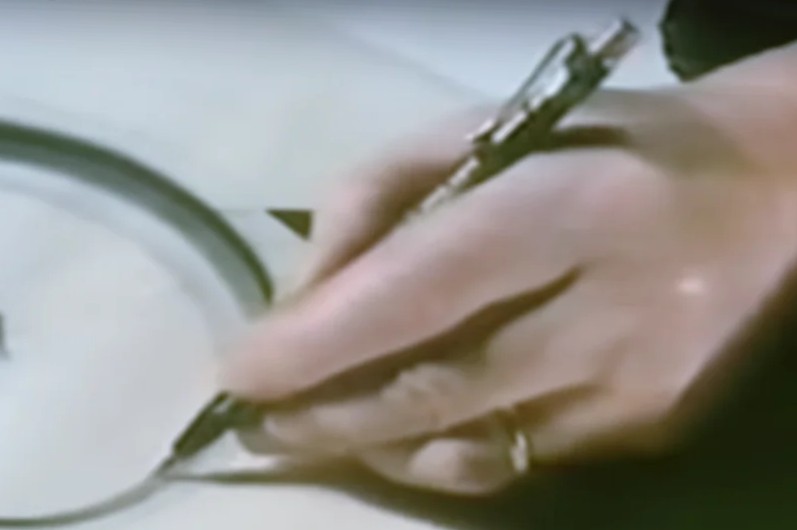
In this later colour footage, Escher is working on the preparatory pencil drawing for what was to be his final woodcut print, Snakes (1969).
The characteristic form of the Caran d’Ache pocket clips can be seen on this display card for the Ecrifix range, also shared on the mechanical pencils subreddit.
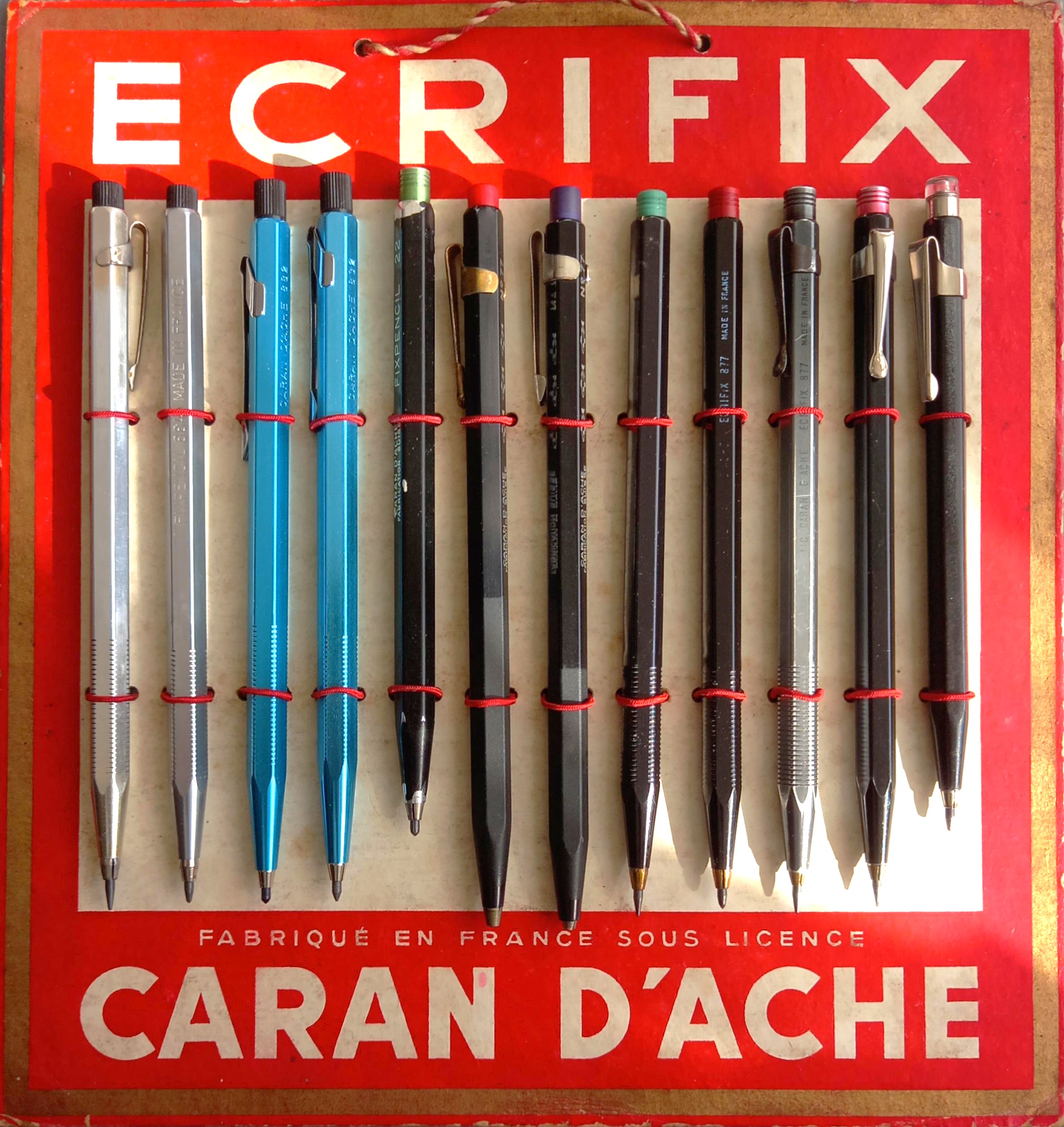
The Ecrifix appears to have been a French-made derivative of the original 1929 Caran d’Ache Fixpencil, launched a full three decades later in 1959 according to this French advertisement.
Reassessing the porte-crayon/pencil combo of Drawing Hands in this new light, it seems that there may be more at play here. The preliminary studies of Escher’s hands were indeed pencil drawings made with graphite on paper, although whether this graphite was held by a porte-crayon, mechanical pencil, or else simply took the form of a traditional wooden pencil is impossible to say.
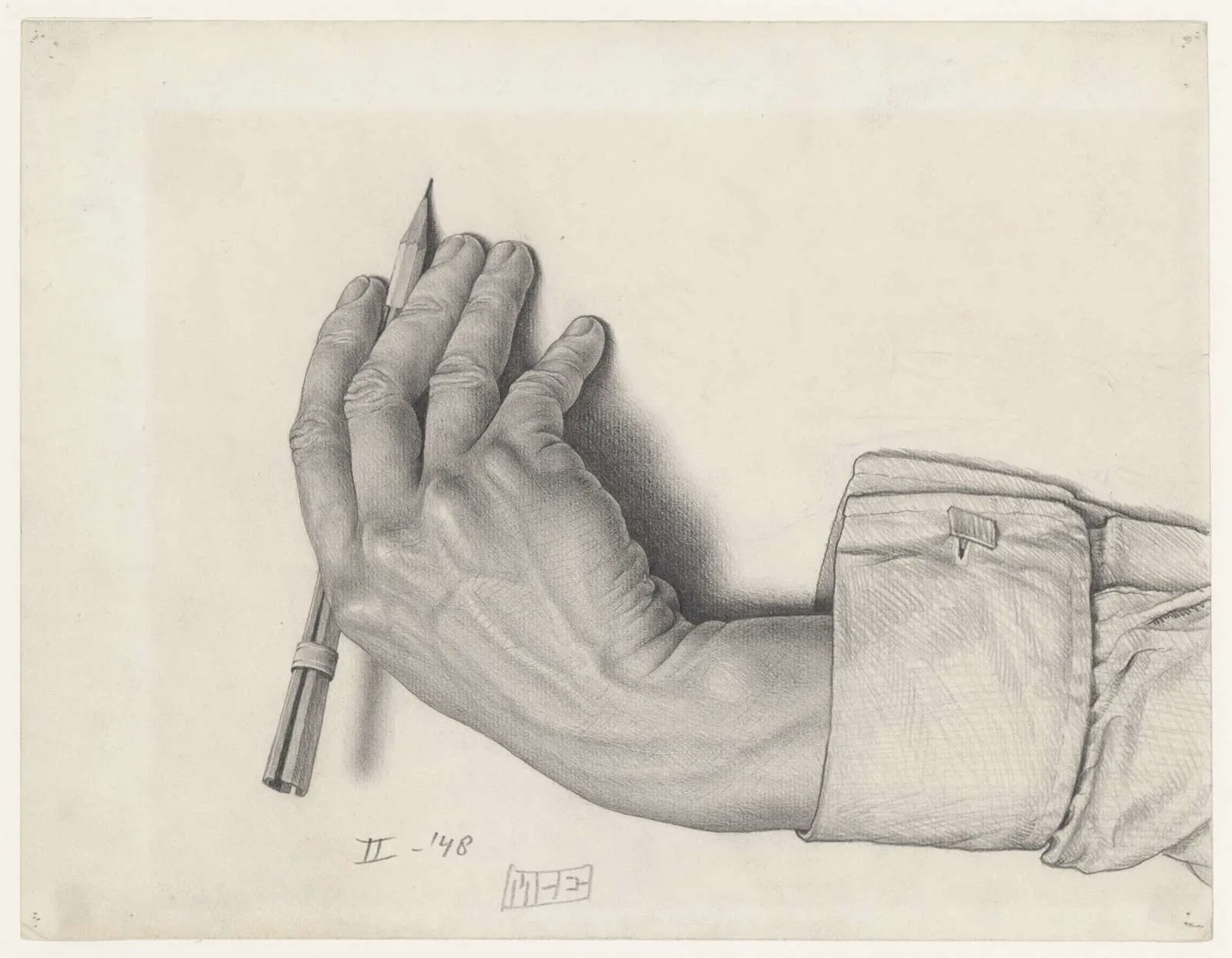
The subsequent lithograph, however, is more likely to have been executed with his usual porte-crayon holder and lithographic crayon.
Just as the duality of the two hands in the process of drawing each other speaks to a number of Escher’s favoured themes – reciprocity, ambidexterity, Möbius strips and impossible loops – maybe the hybrid porte-crayon/pencil likewise represents the superposition of successive stages involved in creating the finished work, a kind of pencil-crayon duality. As such, it did not necessarily represent a single moment so much as a visual concatenation of Escher’s creative process.
At a more visceral level, the hand-cut wooden pencil point is a perfect symbol of the artist at work, even if Escher’s everyday reality was more likely to take the shape of the clinical functionality of the Caran d’Ache Ecrifix and the greasy stump of a lithographic crayon.


Nice to see Escher getting another London show! This has always interested me also, as you have seen from my original images and observations on the subreddit you re-posted here- plese feel free to credit my instagram for any of them too- @thegoophite ( https://www.instagram.com/thegoodphite/ ). See you over on knockology!
Hi thegoodphite, I’m pleased to discover that was also you on reddit – it’s an impressive array of Ecrifixes you have over there! (I have never been on instagram, so sadly all that content remains out of bounds for me.)
I am interested to know what you make of the pencil being used by Escher in the exhibition video (from 48:55 in the link above). When I first watched it at the exhibition, I was fairly certain it was a Caran d’Ache Fixpencil, but having since seen your evidence for the Ecrifix 877 in the Adventures in Perception film I am no longer sure. Besides which, it’s not necessarily the same pencil being used in both videos.
Whichever it turns out to be, Escher clearly didn’t see them as fit subjects for his art, even if they were his tools of choice.