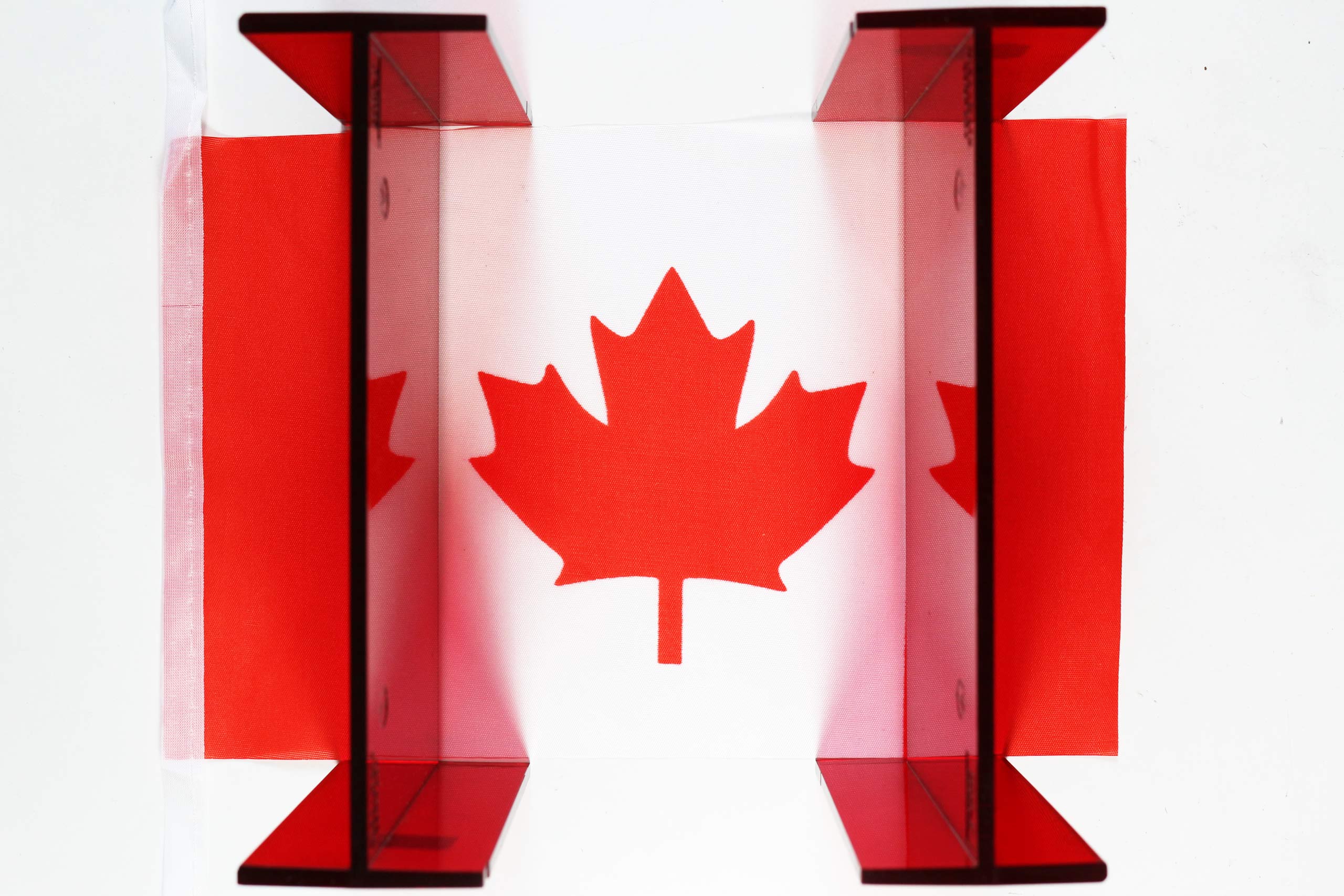
It is a rare treat to find a drawing tool conceived, designed and manufactured entirely in Canada, especially one as off-the-wall as the Mira.
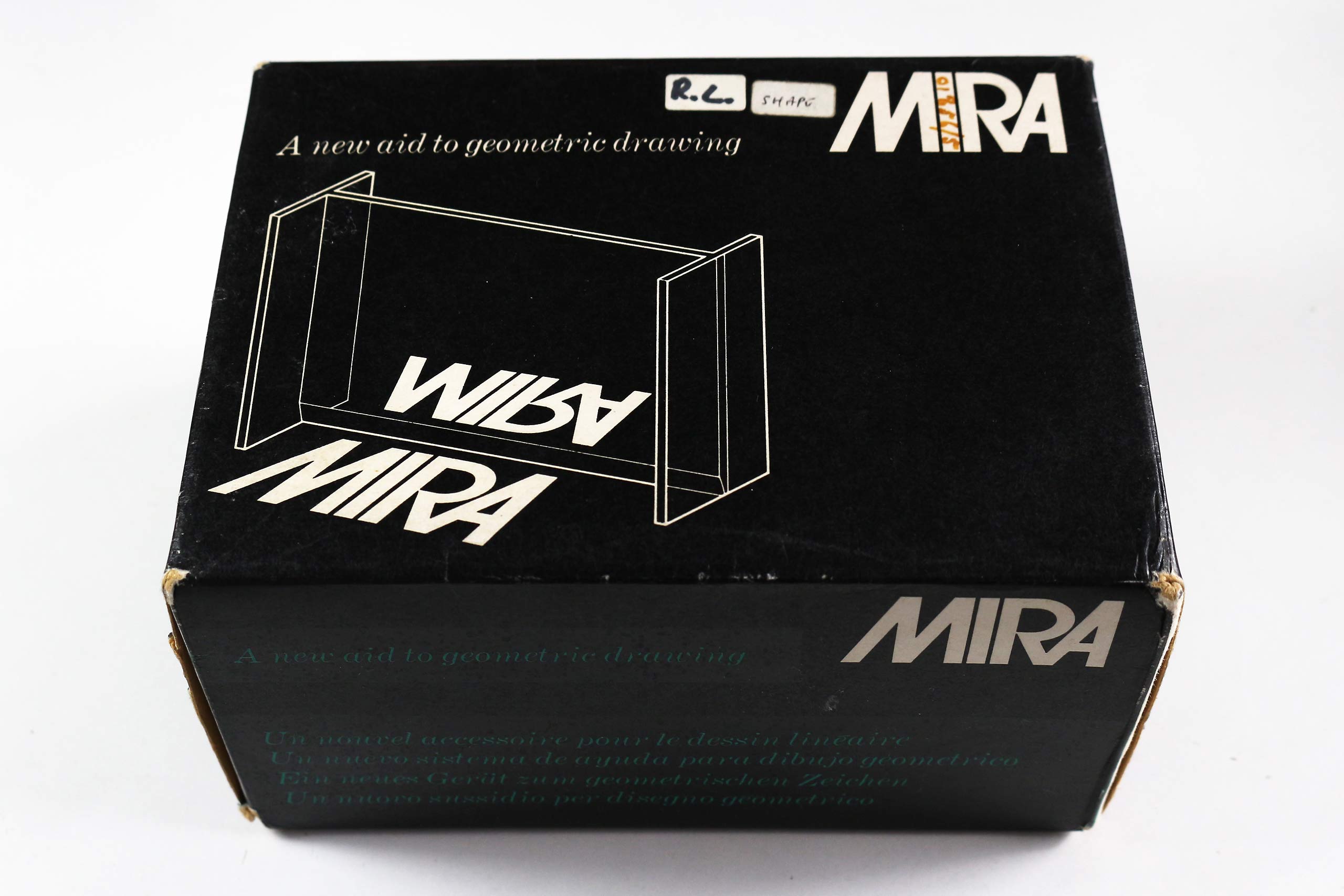
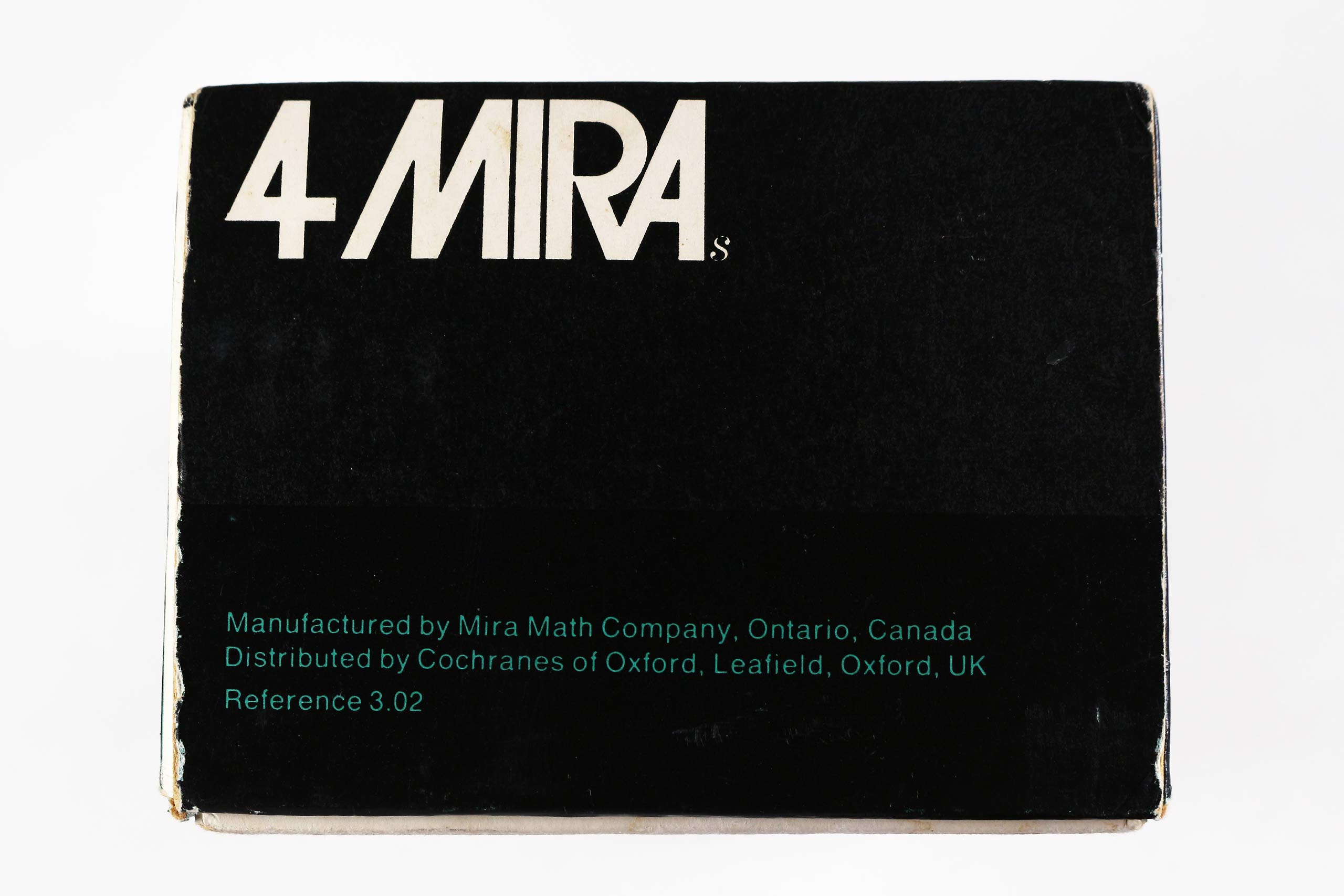
Packed four to a box, which helpfully provides us with the intended plural form of its name: Miras (although, personally, I regret that they did not plump for the more erudite-sounding Miræ), there is little other clue to its purpose, save for the promising strapline “A new aid to geometric drawing”.
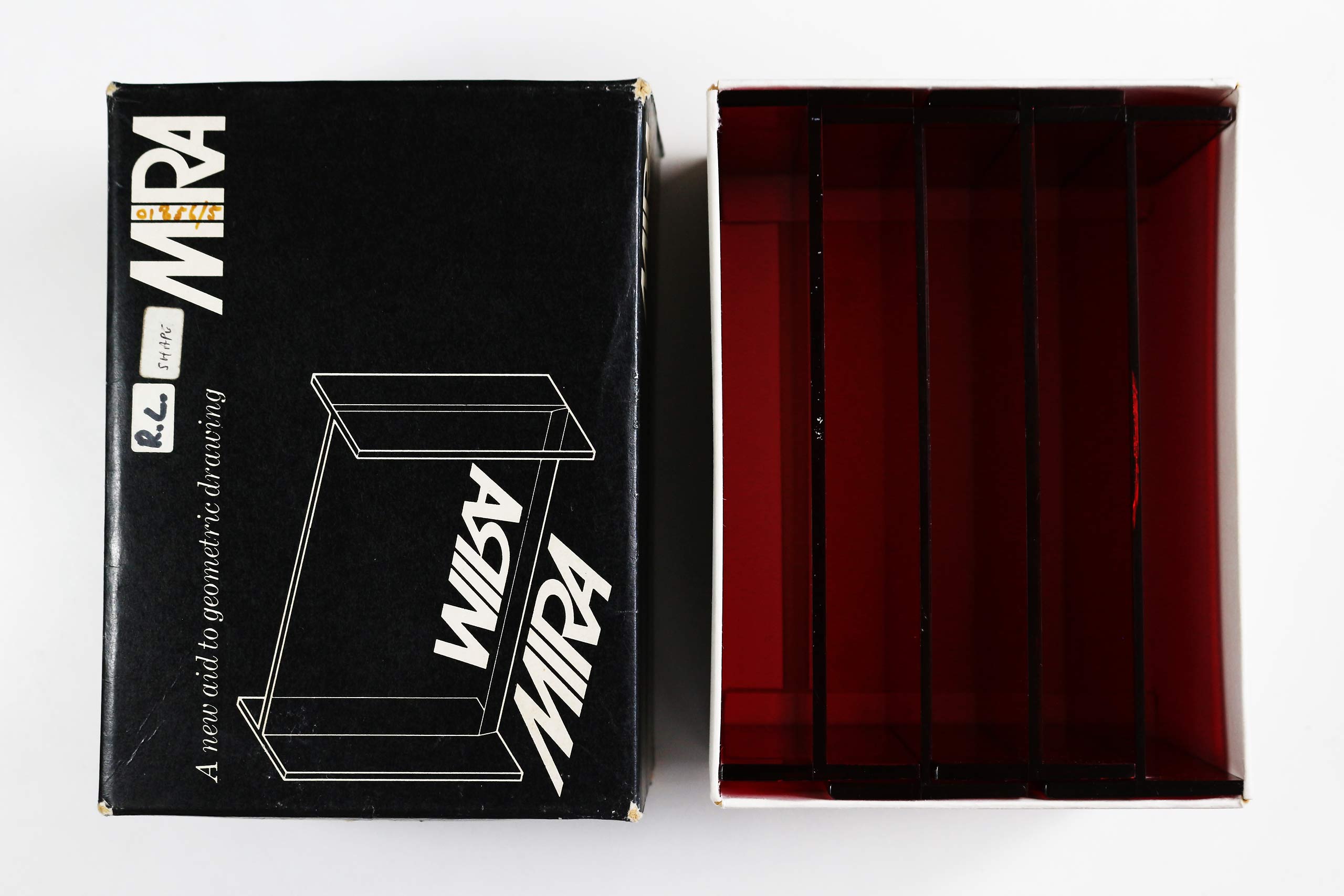
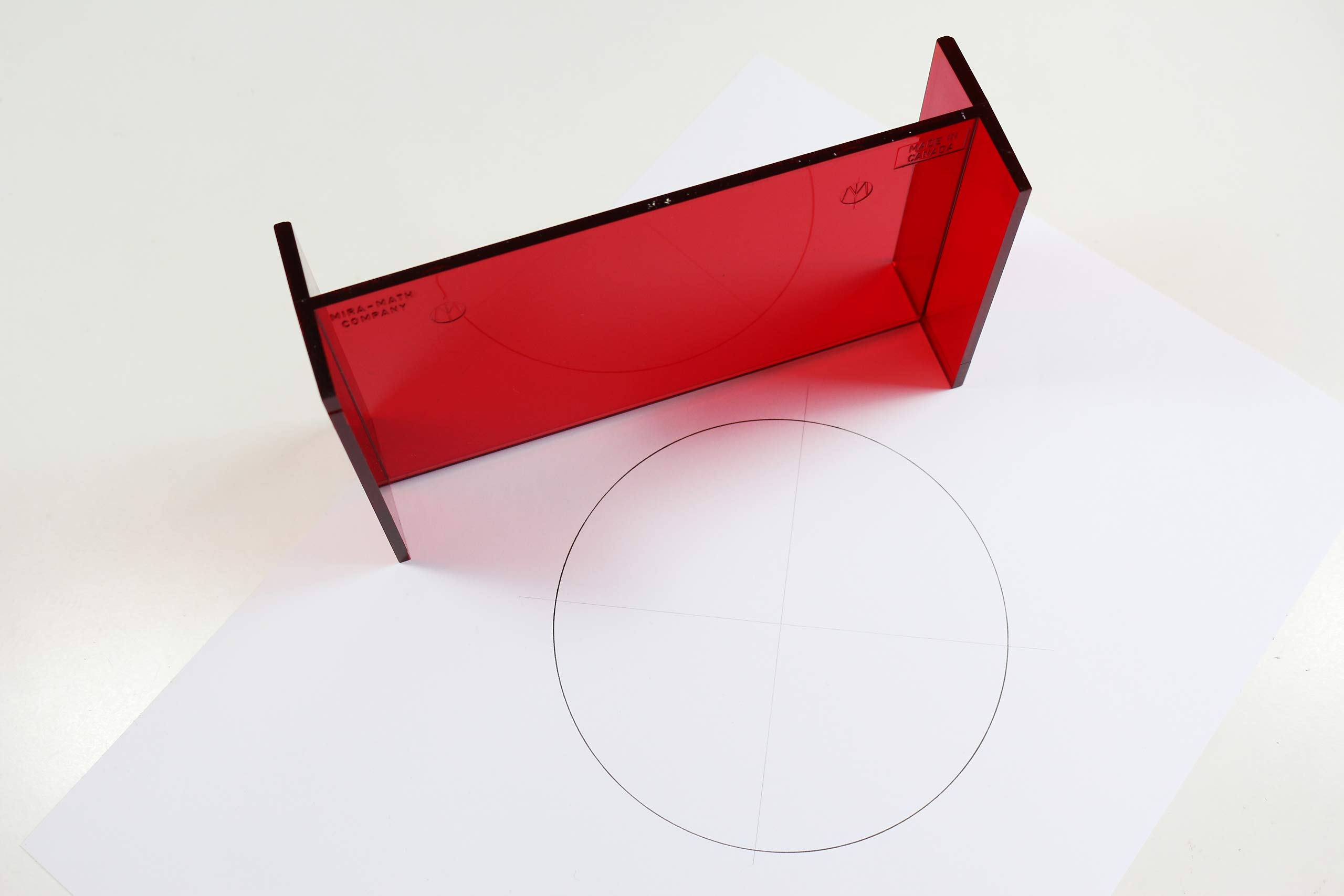
Each individual Mira takes the form of a single piece of injection-moulded transparent red plastic, rather like a girder in cross section and about six inches across at its widest.
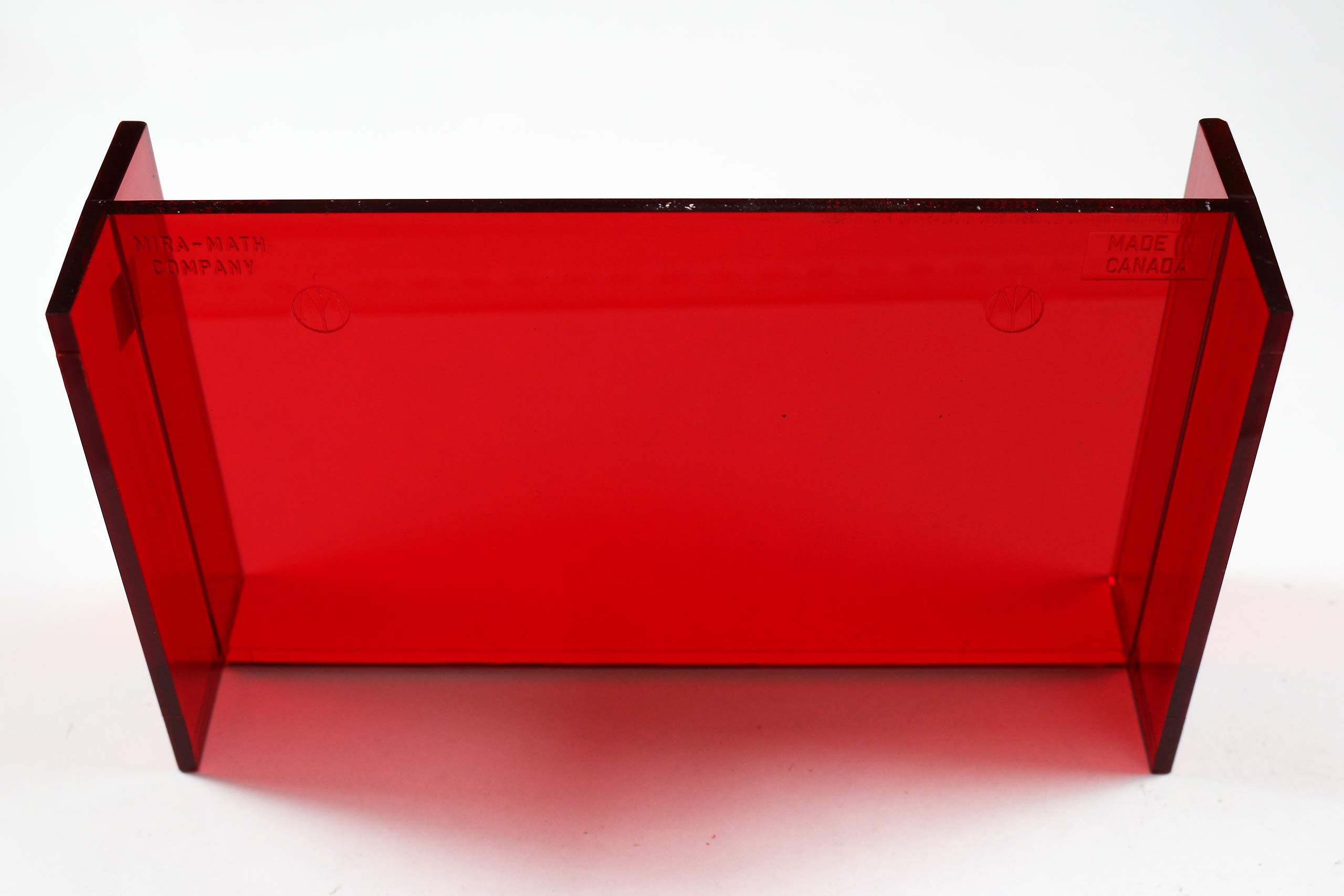
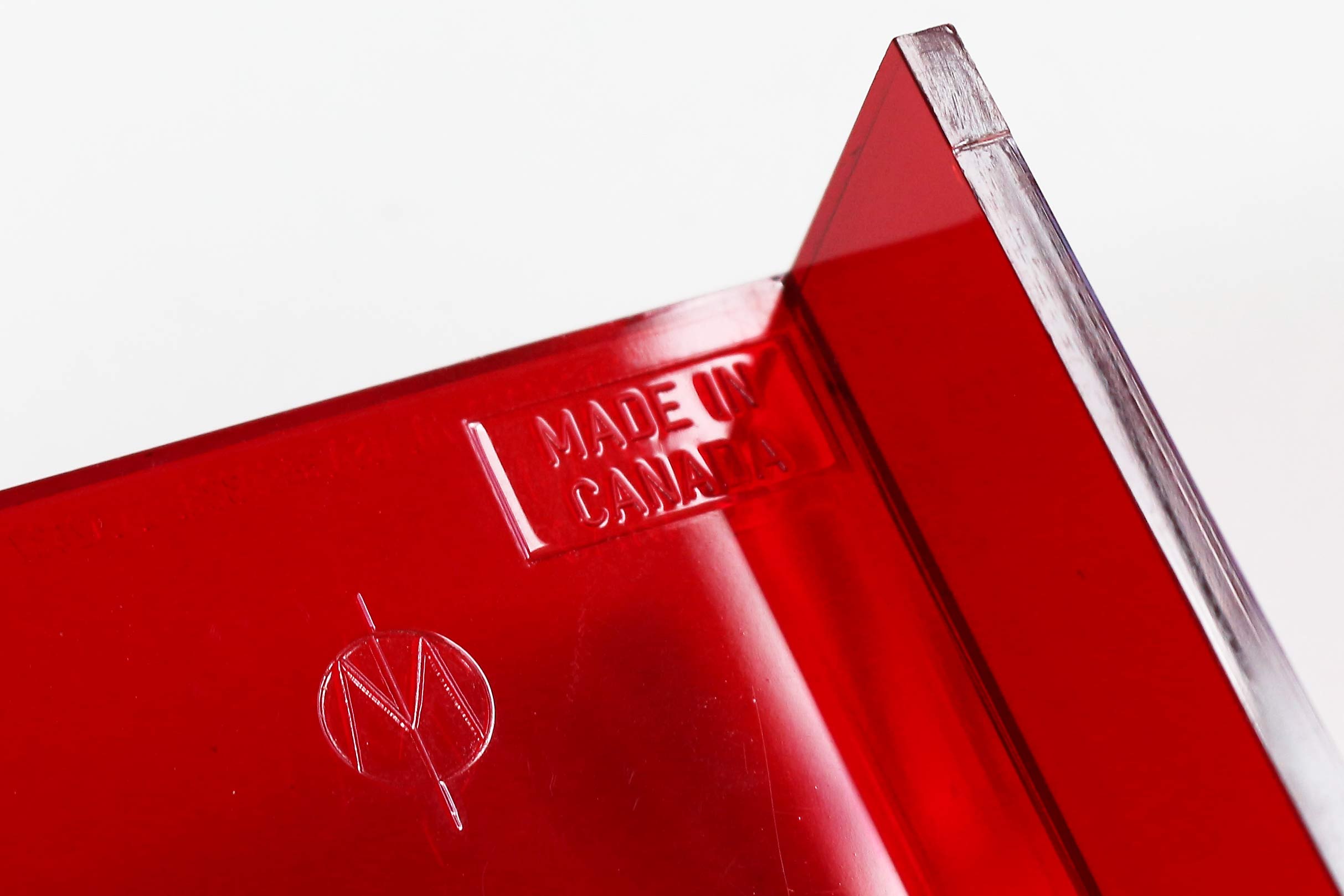
Moulded into the plastic at top left is the name of the manufacturer, the Mira-Math Company, along with its logo which consists of a capital M inscribed in a circle, with a vertical line through the centre to represent its mirror symmetry. The same logo is repeated at top right, alongside the confirmation that this product was indeed “Made in Canada”.
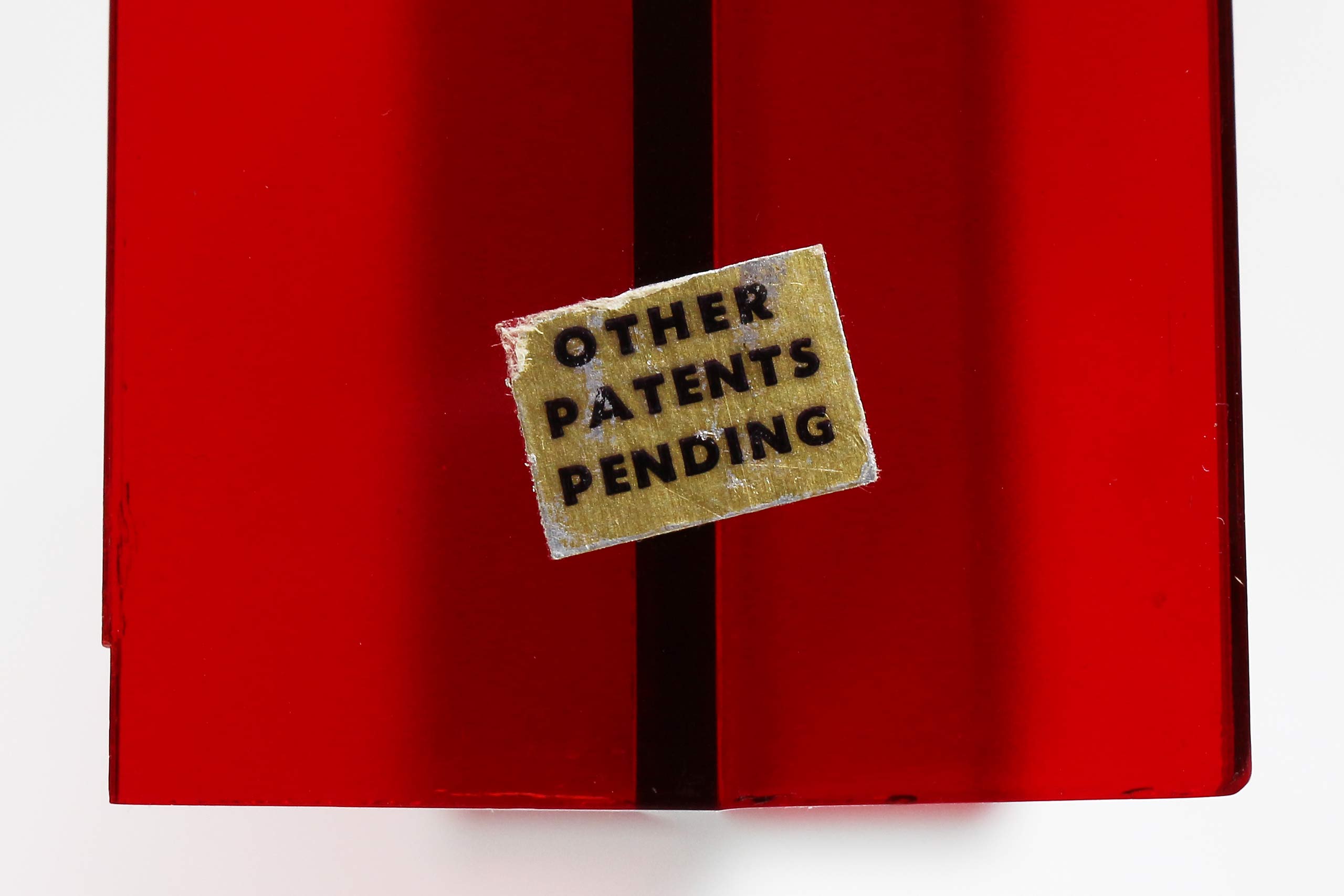
Each Mira carries a label on the side with the message “Other patents pending”, which suggests this particular batch was manufactured during the patent application period for at least some territories.
The company also clearly had a distribution partner for the United Kingdom, in the form of Cochranes of Oxford, still around today.
Helpfully, the reverse side of each instrument’s main panel is imprinted with a series of patent numbers dating to the early 1970s (the first being the Canadian patent of 1970), which reveal it to have been the brainchild of two Ontario-based mathematics teaching professionals, Norman Jarvis Gillespie and George Alexander Scroggie.
A cursory search finds Gillespie working as an inspector of schools in mathematics during the 1960s, having graduated in mathematics and physics from the University of Toronto in 1941.
His co-patentee, George Scroggie, was known as the Ontario Ministry of Education’s “Mr. Mathematics” in the 1970s (see foreword, p.1, Ontario Mathematics Gazette Centennial Issue of 1991), responsible for the introduction of a new curriculum that apparently caused some alarm in the teaching profession due to its radical proposals (ibid. p. 13).
It therefore seems likely that the pair became acquainted through their work for the Ministry, but how did they come to collaborate in the design and manufacture of this “new aid to geometric drawing”, and what was its purpose?
At one level, it is difficult to imagine a more simple drawing instrument. Its name – clearly a phonetic reduction of “mirror” – aptly describes the principle on which it works.
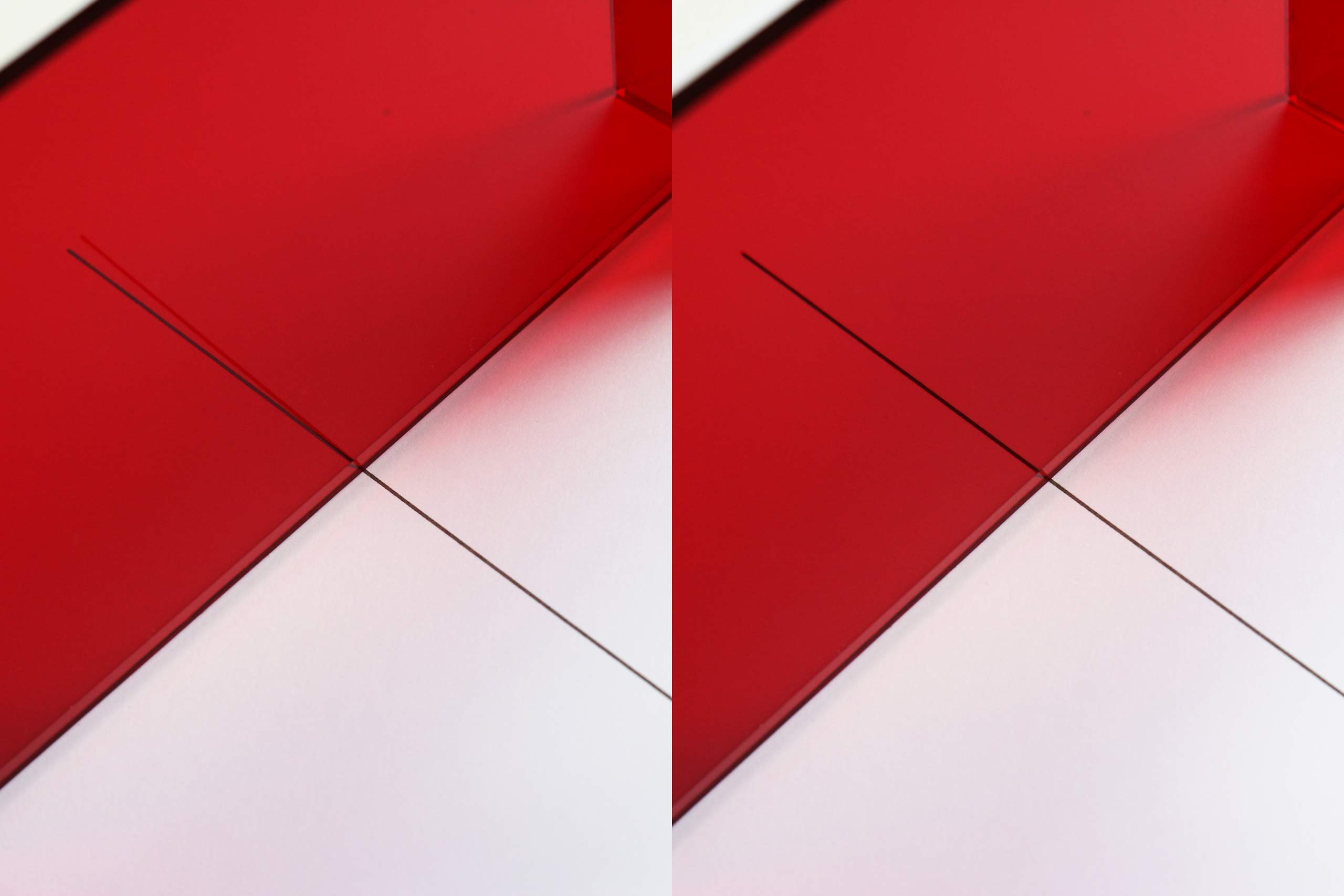
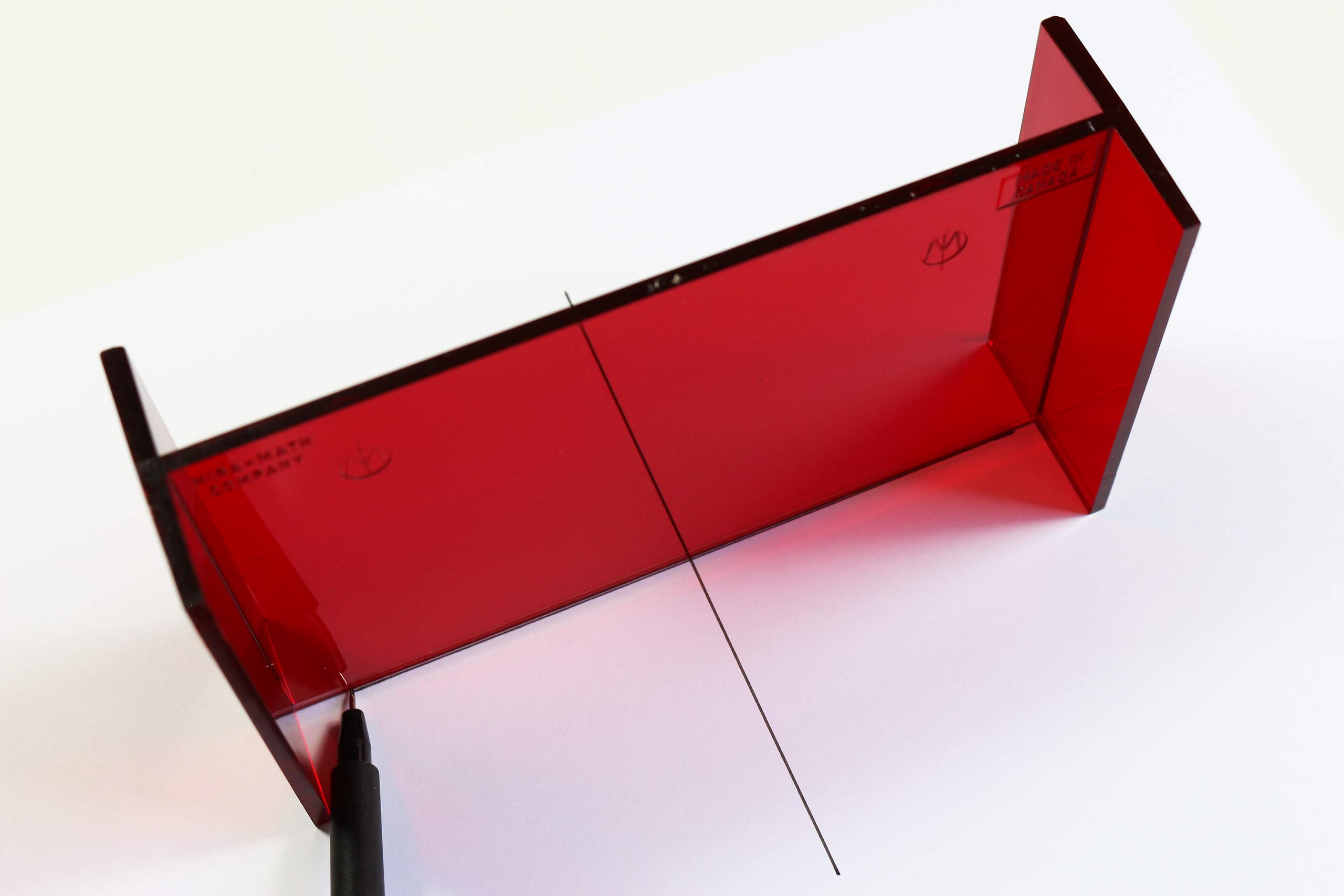
It consists of a transparent red plastic panel with two end flanges to keep it in a stable vertical orientation on the drawing surface. The red colour was chosen to optimise the contrast between reflected and transmitted light, upon which the Mira’s operation depends (similar to the direct reflecting camera lucida, which used a half-silvered mirror to the same effect). This allows a reflected line to be directly mapped to a line seen through the panel, as demonstrated in the two images below (left improperly aligned, right exactly aligned).
The possibilities that this deceptively straightforward device aspired to are perhaps best described by the patent specification:
This invention relates to a transparent mirror device for mapping a geometric figure onto a congruent figure and scribing the right bisectors (sometimes called perpendicular bisectors) of the segments joining corresponding points of the two figures.
A device having this capability has great utility as a geometric instrument. With it one can readily draw the right bisector of a segment of a line, locate the centre of a circle, draw the line of centres of two circles, draw a mid-line between two parallel lines, bisect an angle, etc.
On this basis, it might seem an unlikely candidate to be granted multiple patents worldwide, but the magic of the Mira resides in its recessed drawing edge, precisely calibrated to account for the effect of refraction on the light passing through the centre panel.
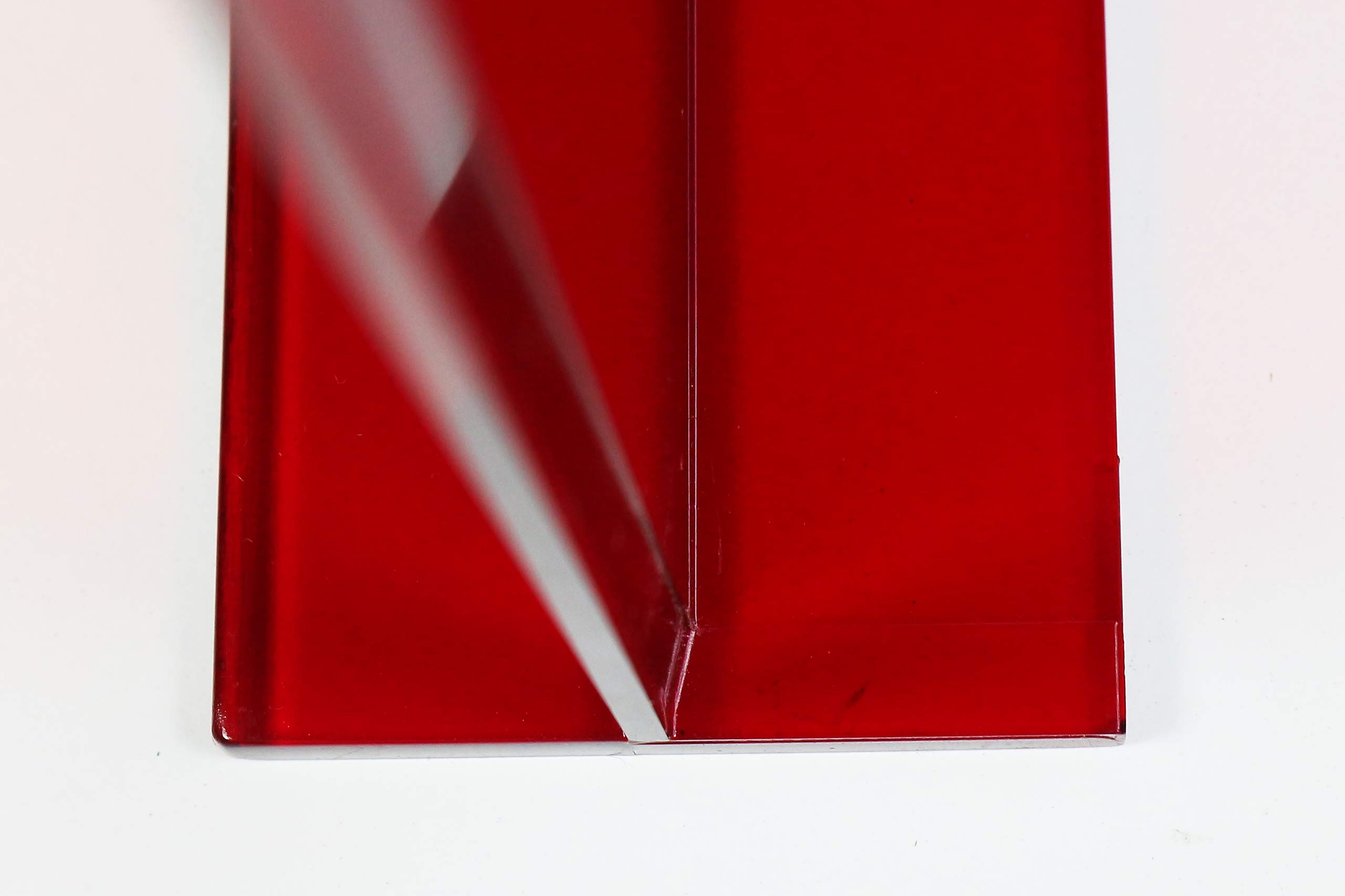
Much of the patent text consists of the geometric calculations and tolerances required to establish the theoretical depth of the ideal centre line between the front and back surfaces. The practical upshot of all this is a rebated lower edge along which a line can be scribed (or, as is more likely, drawn). In addition, the patent suggests the provision of two side notches which would allow points to be pricked off for additional precision (fig. 3 below).
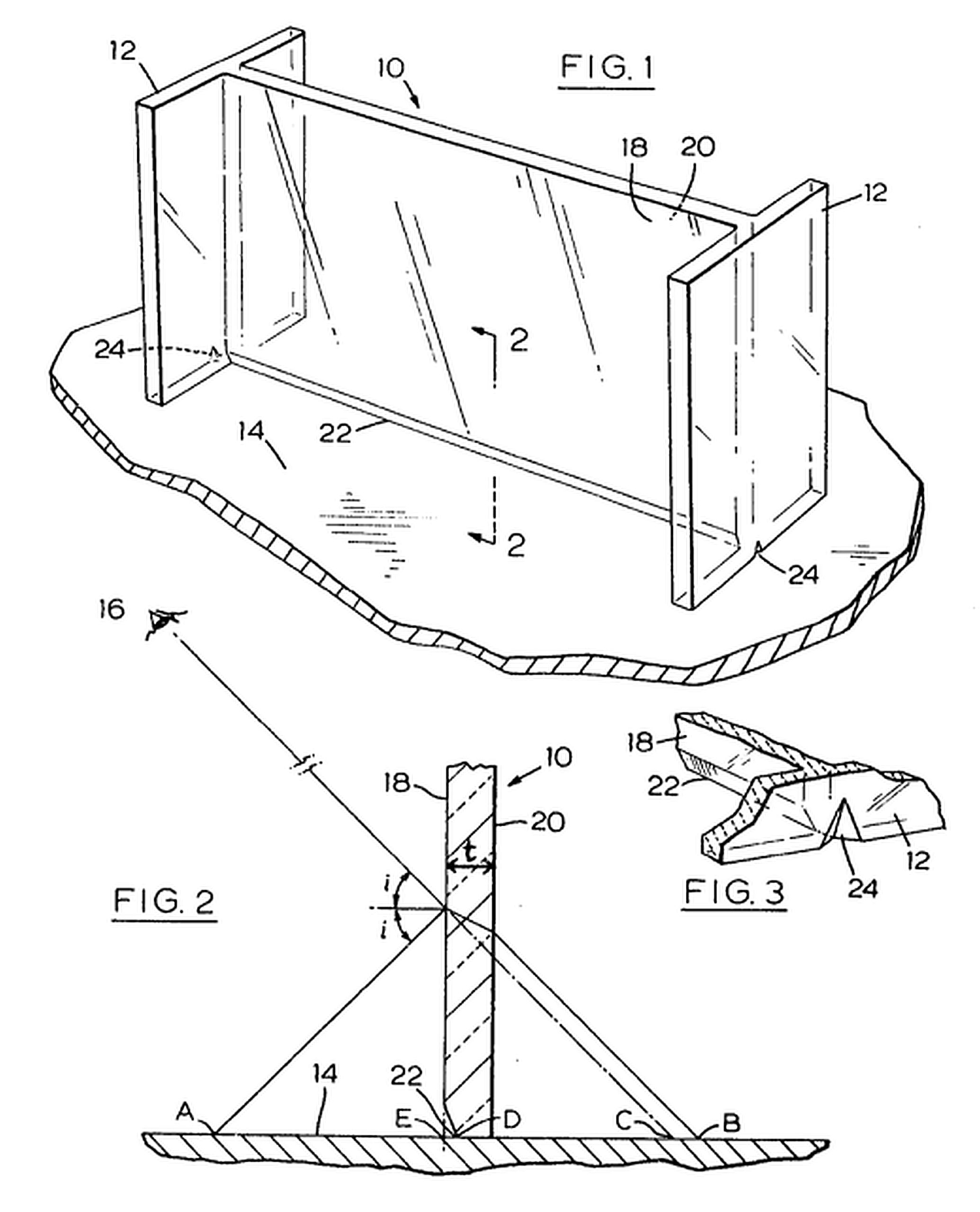
For the purpose of manufacturing a fixed instrument, the inventors settled on an optimal viewing angle of 40 degrees. Assuming the plastic thickness to be 1/8 of an inch, this resulted in a theoretical depth of 0.027 inches for the rebate.
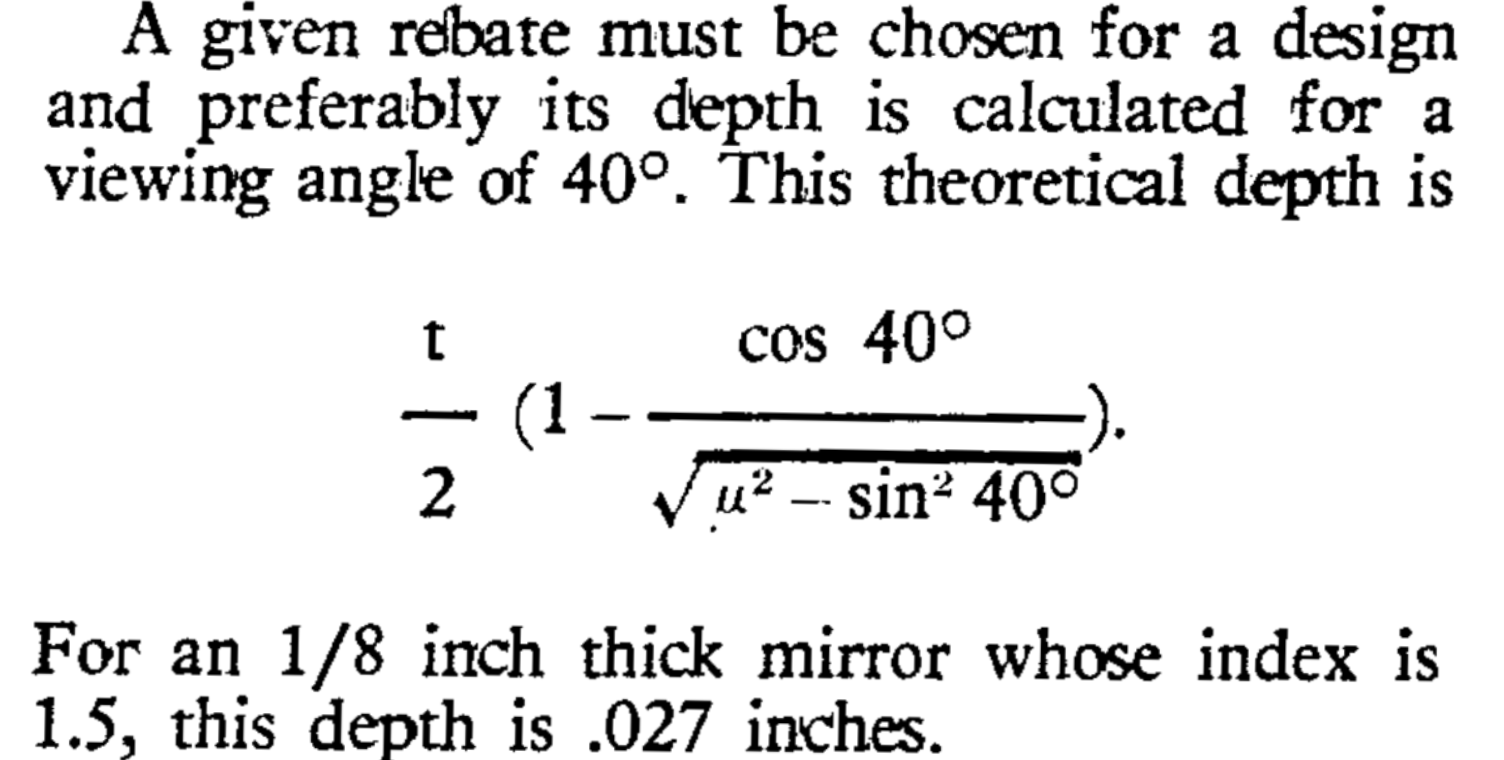
Measurements of the actual object with micrometer calipers suggest that it was closely based on these calculations, the centre panel being exactly 0.125″ (1/8″) thick, with the side supports a little thicker. Surprisingly, the thinnest point of the lower-edge rebate only measured 0.083″, a significant 0.015″ short of the expected 0.098″ based on the aforementioned theoretical depth of 0.027″.
However, it turns out that this extra rebate is equivalent to about half of the guide tube diameter of a Pentel “sharp” mechanical pencil, quickly becoming the new standard for technical drawing at this time. This is clarified in the patent, which notes that:
For each of these calculations the theoretical depth of the rebate must be increased to accommodate the displacement of a sharp pencil line from the edge of the bevel. This displacement is of the order of .015 inches.
So there can be no doubt that the Mira was a precision-made instrument!
In almost all respects, the patent drawings are virtually identical to the actual production model and the illustration on the box. One notable exception is the v-shaped notch on each side, which is absent from the device as fabricated. It may be that the additional difficulty in providing this feature to the required level of precision was simply not worth it in practical terms. As noted, drawing practices were undergoing a period of rapid change, moving away from the traditional use of dividers and prickers and towards the widespread adoption of thin-lead mechanical pencils and tubular technical drawing pens.
On the other hand, the loss of these notches could signify a realisation that the likely market for these devices was not going to be the professional drawing office, but instead educational settings in which absolute precision was not needed. To be fair, this is exactly the use that the MIRA was originally conceived for, and the one in which it found the greatest success.
As mentioned above, the 1970s was a period of change in the teaching profession, no more so than in the field of Euclidean geometry, which had been taught in essentially the same way since the time of the ancient Greeks.
New concepts were emerging in classroom practice, shifting the focus away from classical rule and compass constructions to more abstract concepts such as symmetries, transformations (including slides, turns and flips), enlargements and reductions, distortions and so on, presumably paving the way for modern scientific concepts involving vectors, dynamics and computing.
An early aid in this area was the geoboard, a simple wood or plastic panel with a regular grid of pegs that allowed rubber bands to be stretched between them to create different geometric shapes.
The geoboard was popularised in the 1950s, through the work of pioneering Egyptian mathematician Caleb Gattegno in England, allowing new approaches to geometry and area calculation such as the application of Pick’s theorem, which had also seen a resurgence of interest thanks to Hugo Steinhaus’ 1950 book Mathematical Snapshots.
By the early 1970s, the geoboard had become a fixture in Canadian schools, promoted by mathematics educators such as John Joseph Del Grande whose book Geoboards & motion geometry for elementary teachers gives an overview of contemporary classroom practice.
Notably, chapters 4.1 “Slides, flips and turns” and 4.5 “Symmetry” recommend the use of a “red plexiglass semi-mirror” to study reflections on the grid. Looking back at this time, Del Grande wrote that:
We investigated the geoboard and its applications to mathematics. We soon found that by looking at slides, flips and turns of figures we could mathematize many of the activities on geoboards. It was during this development that Norm Sharp mentioned, one day, that the use of coloured plastic mirrors helped children with reflections or flips. We adapted the idea to geoboards and the related geopapers. This work preceded the development of the Mira by George Scroggie and Norm Gillespie. We were to applaud and support the work of these two men in bringing the Mira to market.
Norm Sharp’s involvement is corroborated elsewhere (see p. 16), where it is claimed that:
he and Betty Hallamore put together one of the first “semi-transparent mirrors” that eventually evolved into the Mira
Maybe this explains how Gillespie and Scroggie first came across the idea for the Mira, during their inspections of school mathematics classrooms. It is not difficult to sense an underlying note of resentment in the above accounts.
However, the Mira aspired to go far beyond the exercises described by Sharp and Del Grande. Indeed, it promised to usher in an epochal revolution in geometry teaching, described in the 1977 book Geometry: Constructions and Transformations (on whose front cover it appears) as surpassing even the methods of the ancients:
The Mira is more than equivalent to the compass and straightedge; that is, the Mira can be used to perform constructions which are not possible with straightedge and compass. For example, with the Mira any angle can be trisected.
Even as late as 1994, The American Mathematical Monthly opined that:
Reflective devices such as the Mira are beginning to be used as a replacement for the compass and (unmarked) straightedge as tools for performing geometric constructions.
Obviously, in hindsight, this revolution in drawing stalled, with both the compass and Mira being rapidly overtaken by computer-aided drawing systems. However, from 1973 until at least the mid-1990s, Gillespie published teaching guides for the Mira, under the imprint of the Mira Math Company Inc. The first of these was Mira Activities for Junior High School Geometry, but more interesting is Mira Activities for the Senior Grades published in 1995.
In this late book, Gillespie really puts the instrument through its paces, at least partly justifying the claim – repeated in the author’s introduction – that “The mira solves some geometry problems that cannot be handled by the Euclidean tools” (mira now written in lowercase throughout). It progresses from solving geometry problems, via using the Mira to draw the conic sections (parabola, ellipse and hyperbola), all the way to more exotic constructions such as the Simson Line, the Euler Line, the DelGrande line, and a Mira proof of Fagnano’s Problem of 1775.
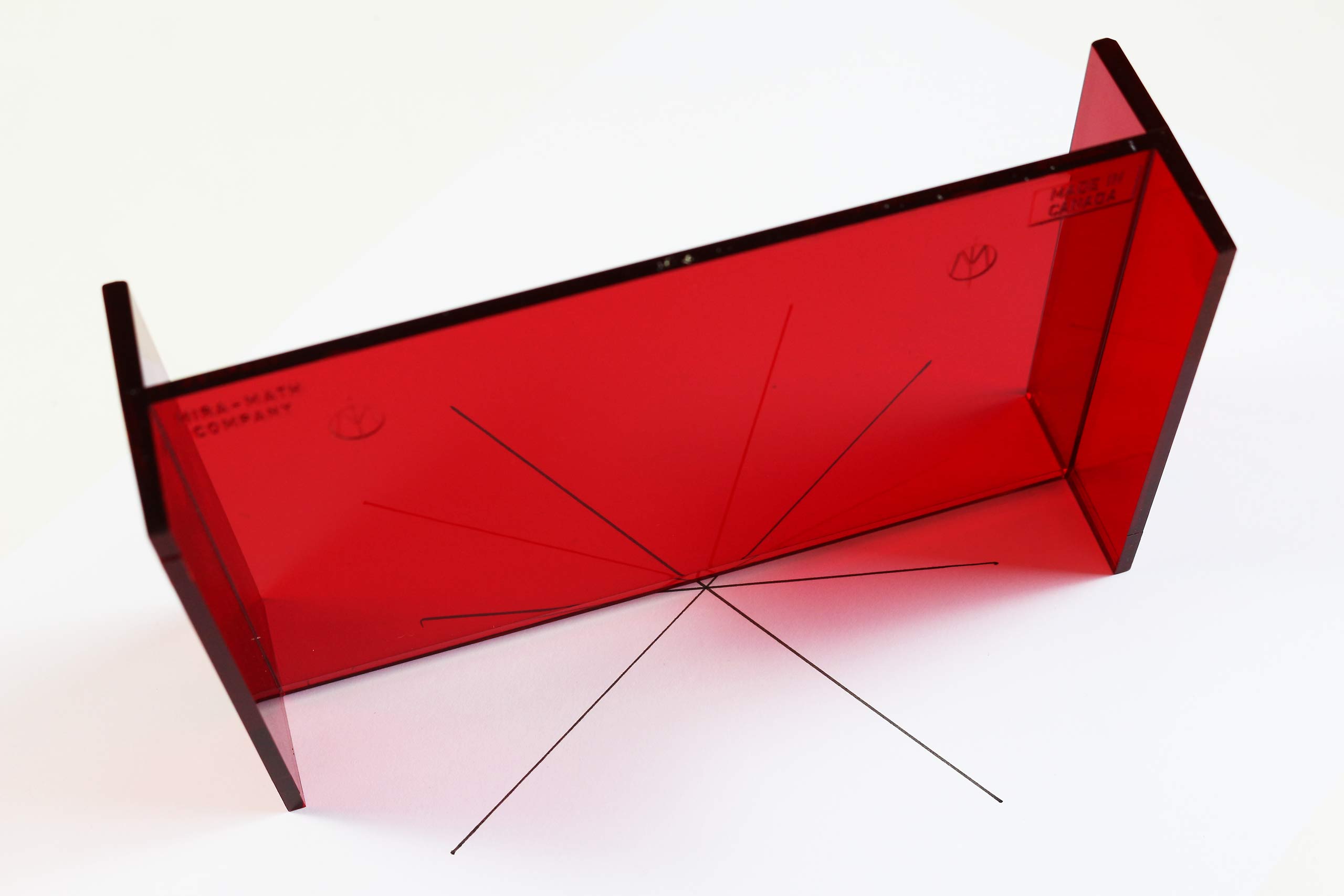
So far I have only experimented with the most basic exercises, such as drawing perpendiculars (see above), bisecting angles:
and finding the centre of a circle:
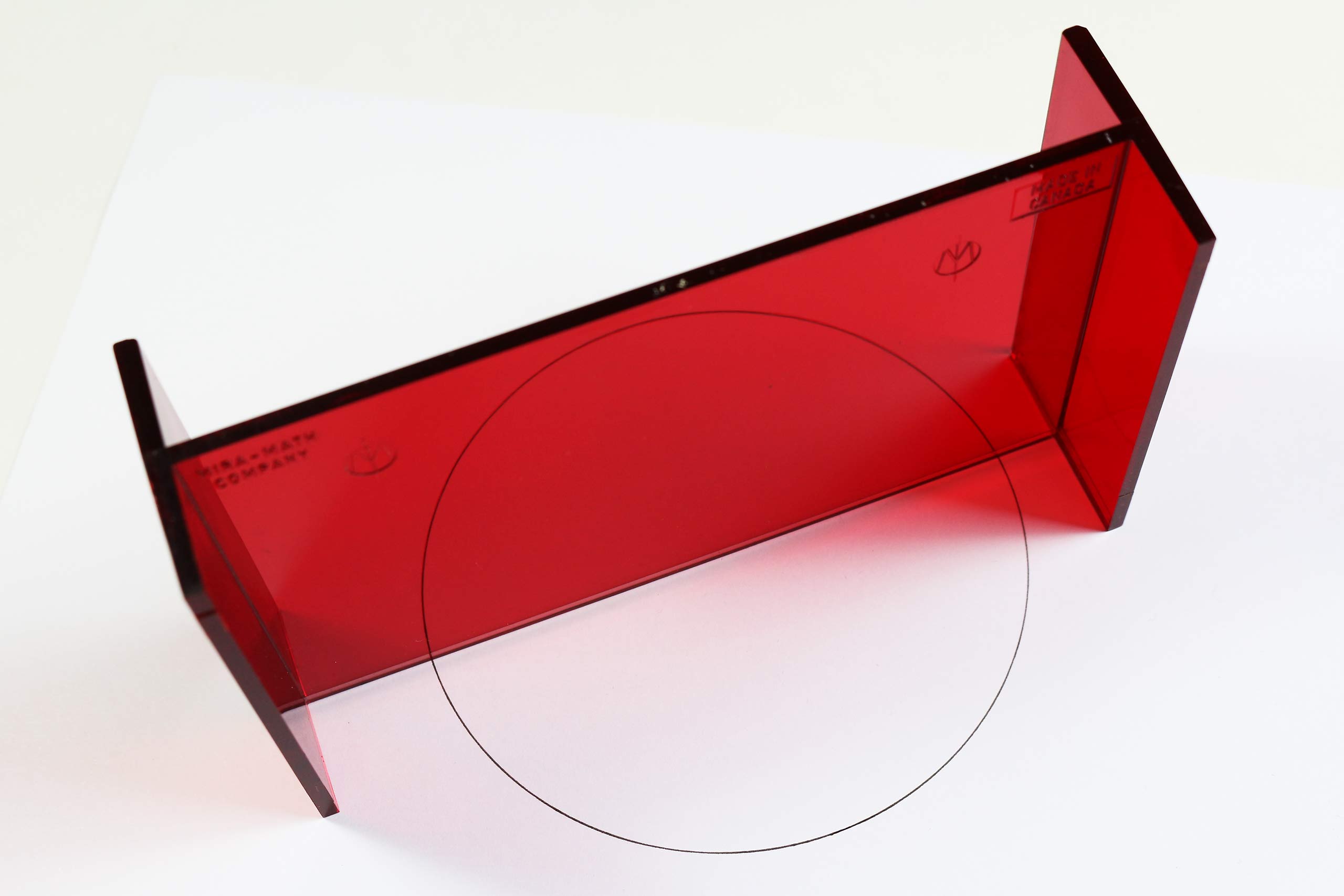
The results have all been surprisingly accurate. Hopefully I will move on to some of the more advanced exercises, including the trisection of angles, in due course.
We know that the Mira was still being used into the 1990s, at least in Canada, but it clearly never gave rise to the revolution in geometric drawing envisaged by its creators, especially Gillespie whose enthusiasm for the instrument is palpable.
Gillespie died in the year 2000, and I have not yet established what became of Scroggie. The Mira trademark was still active in 2007 when it was successfully renewed, but eventually expunged in 2022 after the failure to respond to a renewal notice. The Mira-Math Company appears to be no longer operating.
Even though this marked the end of the Mira itself, to my surprise the device is still available today, going by the name of Geomirror (the modern versions often have mirrored sides), but essentially unchanged. Described elsewhere as a “Mira-Style Geometry Tool”, the de facto colour scheme now seems to be purple, which is a pity. To my mind, the Mira will always be Canadian flag red.